2026 Best Electric Forklifts Why Switch from Diesel?

Time:2026-10-09 Author:Isabella
0%

In 2026, electric forklifts are moving from optional equipment to strategic warehouse assets. The question is no longer whether batteries can replace diesel. It is whether diesel still makes operational sense.

Why switch from diesel to electric forklifts? The answer begins on the warehouse floor. Electric models produce no tailpipe emissions indoors. They also reduce engine noise, fuel storage, and daily exhaust exposure. A lithium-ion forklift can charge during planned breaks, while regenerative braking helps recover energy during operation. Operators may notice a quieter aisle and smoother acceleration within one shift.

The change is not automatically perfect. Battery charging needs planning. High-temperature environments can expose weaknesses. Poorly matched equipment may create downtime instead of savings. That deserves honest attention.

Michael Field, former president and CEO of The Raymond Corporation, said, “Electric forklifts can help companies improve efficiency while reducing their environmental impact.” His point reflects what many fleet managers experience: lower routine maintenance, predictable energy costs, and cleaner work areas can support long-term productivity.

Still, diesel remains useful for some outdoor, heavy-duty applications. Site conditions matter more than marketing claims. A reliable decision compares duty cycles, load weights, charging access, energy prices, maintenance records, and operator feedback.

This guide examines the 2026 best electric forklifts through those practical measures. It will compare power systems, ergonomics, safety features, total cost, and real operating limitations. The goal is not to praise electrification blindly. It is to identify where the switch creates measurable value, and where careful planning is still required.
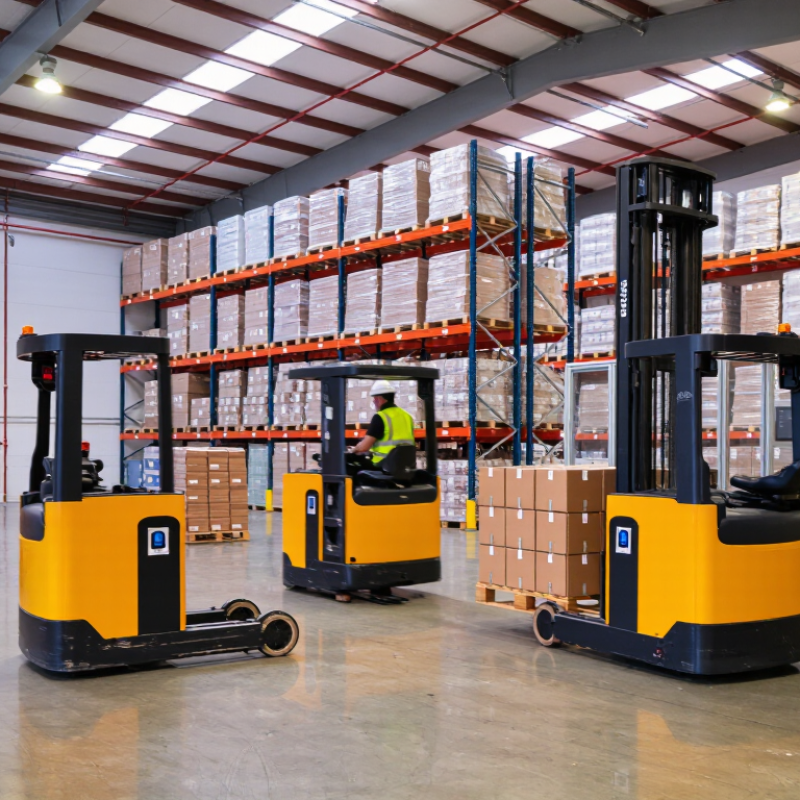
2026 Best Electric Forklifts Why Switch from Diesel?

What Are Electric Forklifts and How Do They Work?

2026 Best Electric Forklifts: Why Switch from Diesel?

What Are Electric Forklifts and How Do They Work?

An electric forklift uses a battery, electric motor, controller, and hydraulic pump. The battery sends direct current to the controller. The controller regulates motor speed and torque. This powers the wheels and lifting system. When the operator lowers a load, regenerative braking can return some energy to the battery.

Lithium-ion batteries support opportunity charging during short breaks. Lead-acid batteries usually require longer charging and battery-changing procedures. Both systems need trained handling and planned charging areas. The U.S. Department of Energy’s Alternative Fuels Data Center reports that electric drivetrains convert about 77–82% of stored energy into vehicle movement. Conventional gasoline systems convert roughly 12–30%. Forklift results vary, but the efficiency gap remains important.

The Industrial Truck Association has reported that electric trucks represent more than half of the North American forklift market. That shift reflects quieter operation, zero tailpipe emissions indoors, and lower routine energy losses. A warehouse aisle feels different without diesel noise or exhaust. However, charging capacity, battery weight, temperature, and duty cycles can complicate the change. The U.S. Department of Energy also warns that charging infrastructure affects fleet economics. A small facility may need electrical upgrades. Sometimes, the promised savings look better on paper than on the loading dock. Careful route data and shift testing matter.

Why Are Businesses Switching from Diesel Forklifts?

Why Are Businesses Switching from Diesel Forklifts?

In a busy warehouse, the change is easy to notice: quieter aisles, no exhaust plume, and cleaner air near loading docks. Industrial Truck Association market statistics show electric lift trucks taking roughly two-thirds of recent U.S. new-unit shipments. That figure signals more than a sustainability trend. It reflects operating pressure.

Diesel still offers fast refueling and strong performance outdoors. Yet its fuel and maintenance burden becomes visible every shift. The U.S. Environmental Protection Agency’s Emission Factors for Greenhouse Gas Inventories lists about 10.21 kilograms of carbon dioxide per gallon of diesel burned. A forklift using eight gallons daily would release roughly 82 kilograms at the tailpipe. Electric models produce no tailpipe emissions. Their total climate impact still depends on electricity generation, battery production, and charging losses. That detail is often skipped.

Operators also report practical gains: less engine noise, fewer fluid checks, and better suitability for enclosed facilities. Lithium-ion batteries can support opportunity charging during breaks, but rushed charging plans may create downtime. Battery replacement costs are not trivial. Neither is peak-demand electricity. A careful fleet review should compare duty cycles, charger capacity, ventilation needs, and local power prices. The answer is not automatically electric. In many mixed fleets, it probably should be.

How Do Electric and Diesel Forklifts Compare in 2026?

In 2026, the comparison between electric and diesel forklifts depends on duty cycle, site design, and energy access. Electric models produce no tailpipe emissions indoors and operate with noticeably less noise. Operators can hear reversing alarms and nearby pedestrians more clearly. Diesel still offers rapid refueling and strong performance during long outdoor shifts. That advantage remains important at remote yards or cold storage facilities.

Battery economics are improving. BloombergNEF’s 2024 Battery Price Survey reported an average lithium-ion pack price of 115 dollars per kilowatt-hour, a 20% annual decrease. This trend can reduce electric forklift purchase costs over time. Yet the calculation is incomplete. Charging stations, electrical upgrades, spare batteries, and downtime also require capital. Not always cheap. The U.S. Department of Energy’s Industrial Decarbonization Roadmap identifies electrification as a major industrial emissions strategy, but it does not make every operation automatically efficient.

Maintenance often favors electric equipment because it has fewer fluids, belts, and exhaust components. Diesel units may need more servicing, especially in dusty environments. However, battery care requires disciplined charging, temperature control, and trained operators. A poorly planned charging room can create delays. In my experience, the best choice comes from logging hourly usage, load weight, grade changes, and charging windows for several weeks. A simple spreadsheet may reveal that one electric truck fits the workload, while another still needs diesel strength. The answer can be mixed.

Which Electric Forklift Types Fit Different Operations?

2026 Best Electric Forklifts: Why Switch from Diesel?

Electric forklifts now fit more operations than many warehouse managers expect. The right type depends on load size, aisle width, floor condition, and working hours. A three-wheel counterbalance forklift suits narrow indoor aisles and frequent turning. Its compact rear design saves space. A four-wheel model offers better stability for heavier loads, uneven surfaces, and longer travel distances.

Reach trucks work well in high-bay warehouses with tall racking. They need smooth floors and disciplined operators. Walkie stackers fit small storage rooms, retail back areas, and moderate lifting tasks. Electric pallet trucks handle short horizontal moves between receiving docks and storage zones. For outdoor yards, electric rough-terrain models may work, but weather exposure and charging access require careful planning. I have seen teams choose a powerful truck, then struggle with its turning radius.

Tips: Measure every aisle before selecting a forklift. Record peak load weights, lift heights, and daily operating hours. Lithium-ion batteries support quick opportunity charging and reduce maintenance, while lead-acid batteries may suit sites with fixed charging routines. Cold storage can reduce battery performance. Test the forklift during a realistic shift, not only during a showroom demonstration.

Switching from diesel can reduce indoor fumes, noise, and routine engine maintenance. However, electricity costs, charger placement, battery replacement, and operator training still affect total ownership. A quieter machine may also hide warning sounds, so pedestrian controls and visibility deserve extra attention. Small oversights matter.

2026 Best Electric Forklifts: Why Switch from Diesel? — Which Electric Forklift Types Fit Different Operations?

Electric Forklift Type Typical Rated Capacity Typical Application Best Operating Environment Typical Energy System Main Advantages Key Limitations
3-Wheel Counterbalance 1.0–2.0 tonnes Light-to-medium pallet handling, retail distribution, narrow aisles Indoor, smooth and level floors Lead-acid or lithium-ion battery Very small turning radius, quiet operation, precise maneuverability Less suitable for rough outdoor surfaces and heavy loads
4-Wheel Counterbalance 1.5–8.0 tonnes General warehousing, manufacturing, loading and unloading trucks Indoor and selected outdoor paved areas Lead-acid or lithium-ion battery Stable load handling, broad capacity range, zero tailpipe emissions Larger turning area than a 3-wheel model; charging space is required
Reach Truck 1.0–2.5 tonnes High-bay pallet storage and retrieval Indoor warehouses with narrow aisles and flat floors Lead-acid or lithium-ion battery High lift capability, compact design, efficient use of vertical space Not designed for rough terrain or prolonged outdoor use
Electric Pallet Truck 1.5–3.0 tonnes Horizontal pallet movement, order staging and short-distance transport Distribution centers, supermarkets and production lines Lead-acid or lithium-ion battery Low operating cost, easy handling, compact footprint Limited lift height and unsuitable for uneven outdoor ground
Electric Stacker 0.8–2.0 tonnes Low-to-medium height pallet stacking and storage Small warehouses, workshops and retail backrooms Lead-acid or lithium-ion battery Lower purchase cost than a reach truck, compact and easy to operate Lower speed and capacity than a counterbalance forklift
Electric Order Picker 0.5–1.5 tonnes Piece-picking, e-commerce fulfillment and case picking Indoor distribution centers with organized picking aisles Lithium-ion or lead-acid battery Improves picker access, quiet operation and precise travel control Primarily designed for picking rather than heavy pallet stacking
Electric Rough-Terrain Forklift 1.5–5.0 tonnes Construction materials, landscaping and outdoor site logistics Firm outdoor surfaces and applications requiring low noise High-voltage lithium-ion battery Lower noise and local emissions, suitable for noise-sensitive areas Higher initial cost and battery performance can decline in extreme temperatures

Why Switch from Diesel to Electric?

Evaluation Dimension Electric Forklift Diesel Forklift Operational Meaning
Local exhaust emissions No tailpipe emissions during operation Produces exhaust gases and particulate emissions Electric models are generally better suited to enclosed workplaces and clean production areas
Noise and vibration Lower noise and vibration levels in normal use Higher engine noise and vibration Can improve communication, operator comfort and noise control
Energy and maintenance Fewer engine-related service items; electricity and battery costs apply Fuel, engine oil, filters and exhaust-system maintenance are required Total cost depends on duty cycle, electricity prices, battery strategy and utilization
Refueling or recharging Requires planned charging, battery exchange or opportunity charging Fast refueling is practical for long continuous shifts Electric fleets need suitable chargers, electrical capacity and shift planning
Indoor suitability Strong suitability for indoor operations Ventilation is needed where exhaust gases may accumulate Electric forklifts are often preferred in food, pharmaceutical and enclosed warehouse operations
Purchase investment May have a higher initial purchase price, especially with lithium-ion batteries May have a lower initial price in some capacity classes A lifecycle-cost comparison is more meaningful than purchase price alone

Selection Checklist for 2026 Electric Forklift Projects

Load and lift requirement Confirm the actual load weight, load center, attachment weight and required lift height before selecting rated capacity.
Aisle and floor conditions Measure aisle width, turning space, floor load rating, ramps, thresholds and surface conditions.
Shift pattern Match battery capacity and charging strategy to operating hours, utilization rate, breaks and the number of shifts.
Charging infrastructure Check electrical capacity, charger location, ventilation, fire-safety procedures and battery-handling requirements.
Total cost of ownership Compare purchase price, electricity, battery replacement, maintenance, downtime, operator productivity and infrastructure costs.
Safety and compliance Verify load charts, visibility, stability, pedestrian controls, operator training and applicable workplace regulations.

Note: Capacity, lift height, runtime and performance vary by configuration, attachment, load center, battery specification, floor condition and operating cycle. Always confirm the manufacturer’s rated data and applicable local safety requirements before purchase.

What Should Buyers Consider Before Choosing an Electric Forklift?

Choosing an electric forklift in 2026 starts with the work, not the brochure. Measure load weights, lift heights, travel distances, and daily operating hours. A warehouse moving pallets 200 times per shift has different needs from a quiet workshop. Check floor condition, aisle width, ramps, and outdoor exposure. Electric models can reduce exhaust fumes and indoor noise, but they still require disciplined charging and maintenance. That part is often underestimated.

Battery choice deserves careful attention. Lead-acid batteries usually cost less initially, while lithium-ion systems can support opportunity charging and steadier performance. Compare usable capacity, charging time, replacement cost, ventilation requirements, and expected service life. Confirm whether your electrical supply can handle several chargers during shift changes. A forklift that waits for power is not productive. Ask for measured runtime data under loads similar to yours, not ideal laboratory figures.

Safety and support should shape the purchase. Review visibility, braking, stability, speed controls, alarms, operator training, and applicable workplace requirements. Test the forklift with real pallets on your actual floor. Small details matter: a low step, clear display, and predictable steering can reduce fatigue. Request maintenance schedules, spare-parts availability, warranty terms, and technician response times in writing. Calculate energy, labor, downtime, and battery costs across several years. My practical caution is simple: projected savings can look impressive, yet poor charging habits or unsuitable tires may erase them. Leave room to question the first estimate.

FAQS

Which forklift is better for indoor warehouse work in 2026?

Electric forklifts suit indoor warehouses because they produce no tailpipe emissions. They also operate with less noise.

When does a diesel forklift remain practical?

Diesel forklifts remain useful for long outdoor shifts and remote yards. Refueling is quick and familiar.

How do operating costs compare between electric and diesel forklifts?

Electric forklifts may reduce fuel, fluid, belt, and exhaust-system expenses. Their maintenance needs are often simpler.

What battery choice fits different work schedules?

Lead-acid batteries may suit fixed charging routines and lower initial budgets. They require planned charging periods.

Which electric forklift fits narrow warehouse aisles?

Three-wheel counterbalance forklifts suit narrow aisles and frequent turning. Their compact rear design saves space.

Are electric forklifts suitable for outdoor yards?

Some electric rough-terrain models can handle outdoor work. Weather exposure and charging access require careful planning.

What measurements should buyers collect before choosing a forklift?

Record load weights, lift heights, travel distances, aisle widths, ramps, and daily operating hours.

How can companies avoid poor electric forklift performance?

Confirm electrical capacity before installing several chargers. Train operators in charging, battery care, and temperature control.

Conclusion

Electric forklifts use rechargeable batteries to power an electric motor, hydraulic systems, and lifting functions, producing no on-site exhaust emissions. In 2026, more businesses are asking, “Why switch from diesel to electric forklifts?” The answer includes quieter operation, lower routine maintenance, improved indoor air quality, and potentially reduced energy and operating costs. Compared with diesel models, electric forklifts can offer smoother handling and better suitability for warehouses, food-related facilities, retail distribution centers, and other enclosed environments, although charging time, battery capacity, and purchase price require careful planning.

Different operations may benefit from different electric forklift designs, including compact models for narrow aisles, counterbalance trucks for general material handling, and specialized options for heavier or more frequent loads. Before purchasing, buyers should evaluate load capacity, lift height, floor conditions, duty cycles, charging infrastructure, battery technology, operator comfort, safety features, service support, and total cost of ownership. A thoughtful comparison with diesel equipment helps companies select an electric forklift that matches productivity goals while supporting cleaner and more efficient operations.

Isabella

Isabella

Isabella is a dedicated marketing professional with a sharp focus on driving brand growth and engagement through strategic content creation. With an extensive background in digital marketing, she combines her passion for storytelling with her keen understanding of industry trends to deliver......