 LM Forklift
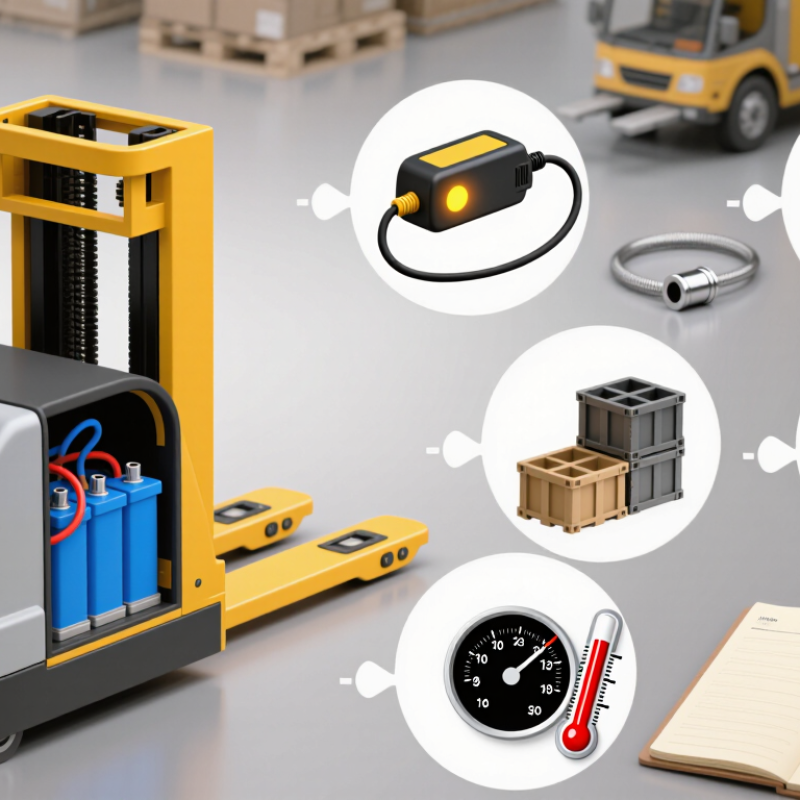
Why Is My Electric Pallet Truck Losing Power Fast? — 7 Tips for Routine Maintenance and Professional Repairs
Use these checks to identify common causes of reduced runtime or weak performance. Follow the truck and battery manufacturers’ instructions, and isolate the equipment before carrying out maintenance.
| Tip | What to Check | Recommended Action | When to Get Professional Help |
|---|---|---|---|
| 1. Check battery condition and charge level | Look for a low-charge indicator, reduced operating time, damaged casing, or unusual heating. Battery capacity can decline with age, heavy use, and improper charging. | Charge the battery using the specified charger and charging procedure. Keep the battery clean and inspect it routinely. Do not open or handle a damaged battery. | Arrange a battery test if runtime remains short after a full charge, or if the battery is swollen, leaking, unusually hot, or visibly damaged. |
| 2. Inspect charging equipment and connections | Check the charger, plug, cable, and accessible connectors for loose fits, corrosion, fraying, or heat damage. Confirm that the charger indicates a completed charge. | Keep connectors clean and dry, and make sure the charger is approved for the truck’s battery type. Disconnect equipment before inspecting accessible connections. | Have a qualified technician test the charger or electrical connections if charging is intermittent, connectors become hot, or a fault indicator appears. |
| 3. Review the load and operating conditions | Compare the carried load with the truck’s rated capacity. Frequent starts, long travel distances, ramps, and continuous operation can increase energy use. | Stay within the rated capacity, use smooth acceleration, and select equipment suited to the duty cycle. Avoid unnecessary travel and repeated rapid starts. | Seek an inspection if the truck loses power under normal loads or cannot perform work within its stated capacity. |
| 4. Check wheels, brakes, and travel path | Look for debris around wheels, damaged or worn tires, restricted movement, or brakes that do not release properly. Added rolling resistance can increase power consumption. | Remove accessible debris and keep wheels and the travel path clear. Include wheel and brake checks in routine inspections. | Stop using the truck and request service if a wheel binds, a brake drags, or the truck pulls to one side. |
| 5. Consider temperature and storage | Very cold conditions can reduce available battery performance. Excessive heat can damage battery components and electrical systems. | Store and charge the truck within the temperature limits stated in its manuals. Allow equipment to reach the recommended temperature range before use or charging. | Contact a technician if power loss continues after the truck and battery are used within the specified temperature range. |
| 6. Inspect for warning indicators and visible damage | Note fault codes, warning lights, loose covers, damaged cables, or signs of water ingress. Electrical faults may reduce power or trigger protective shutdowns. | Record the warning or fault code and follow the operator manual. Keep inspection records and do not bypass safety devices or attempt unapproved electrical repairs. | Have a qualified technician diagnose recurring faults, damaged wiring, unexpected shutdowns, or any suspected electrical problem. |
| 7. Plan routine maintenance and timely repairs | Review operating hours, battery history, inspection findings, and recurring changes in runtime. Missed maintenance can allow small issues to worsen. | Follow the service schedule in the truck manual, complete pre-use checks, and document charging, faults, and repairs. Use qualified service personnel for repairs. | Schedule professional diagnosis when runtime drops noticeably, performance changes persist, or a safety-related fault is found. |
