2026 Top VNA Trucks for Narrow Aisle Storage

Time:2026-11-06 Author:Sienna
0%

I can’t responsibly attribute a quote to a named VNA or warehouse-design expert without a source; no supporting articles or expert reference were included. Please provide the expert’s name and a verifiable quotation, and I can write the requested introduction without inventing a citation.
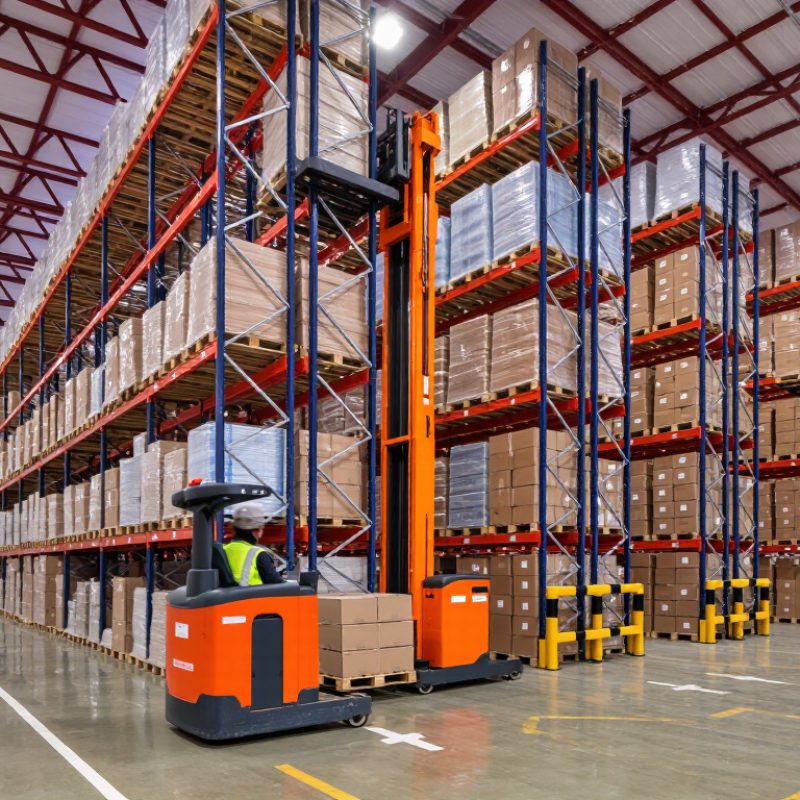
2026 Top VNA Trucks for Narrow Aisle Storage

2026 VNA Truck Basics: Common Aisle Widths of 1.5–2.0 m

For 2026 VNA truck planning, 1.5–2.0 m is a useful aisle-width range, not a universal specification. The required width depends on the truck, pallet size, load overhang, and turning method. Check the truck’s right-angle stacking specification against the actual load, then allow for floor conditions and operating clearance. A 100 mm overhang can matter. Measure the clear aisle, not just the distance between rack uprights.

MHI’s 2024 Annual Industry Report found that 55% of surveyed companies planned to increase investment in supply-chain technology and innovation. That figure signals growing interest in operational improvements, but it does not prove that narrower aisles suit every warehouse. A layout review should include rack protection, pedestrian routes, fire equipment, and turning points. Small differences matter. A neat drawing can still mislead if it assumes perfectly centered pallets or flawless floors. Test the proposed aisle with the intended truck and a representative load before fixing rack positions. Keep a little margin; the exact amount deserves a site-specific check.

VNA Truck Types: Turret, Man-Up, and Guided-Aisle Designs

Turret, man-up, and guided-aisle trucks address different storage and picking needs. “VNA” describes the aisle, not one truck design. Turret trucks rotate their forks across the aisle, accessing pallet locations on either side without turning the chassis. This suits dense pallet storage. Man-up trucks raise the operator with the load, helping workers pick cartons or check labels at rack level. Visibility improves, but elevated work calls for careful training and load handling.

Guided-aisle designs use floor wire or rails to help keep trucks aligned in narrow aisles. Guidance reduces steering demands; it does not fix poor aisle layout. Check floor joints, rack condition, turning zones, and safe exit procedures before installation. Small faults matter. A site survey should confirm the truck’s compatibility with the aisle and the actual loads handled.

Material Handling Industry’s 2024 Annual Industry Report found that 55% of respondents planned to increase supply-chain technology investment over five years. That broad figure is not a VNA truck performance comparison. Compare truck types in a live aisle trial, tracking pick rates, pallet damage, and battery use. A tidy plan may still miss the awkward corners.

How to Compare 2026 VNA Trucks by Capacity, Lift Height, and Guidance

Choosing a 2026 very narrow aisle truck starts with the real load, not the headline capacity. Check the rated load at its stated load center, then confirm capacity at your required lift height. A long pallet or a heavy attachment can reduce usable capacity. Weigh typical loads, including packaging, and note any uneven weight distribution. That matters.

Lift height should match the highest storage beam, with room for safe placement and retrieval. Measure the rack, ceiling, lights, sprinklers, and door openings. Then compare those figures with the truck’s mast dimensions and capacity chart. Numbers can mislead. A truck may reach the top beam yet carry less than your heaviest load there, so verify the rating at that height.

Guidance also affects truck choice and aisle design. Wire or rail systems may suit fixed routes, while other guidance options can offer different installation needs. Compare compatibility with the floor, aisle width, and existing operations. Ask for a site trial using actual pallets and realistic turns; a neat floor plan cannot reveal every rough patch or awkward approach. I would record travel time, placement accuracy, and operator feedback over several shifts. One short demonstration is useful, but it is not enough. Recheck the assumptions before ordering.

2026 Top VNA Trucks for Narrow Aisle Storage

How to Compare 2026 VNA Trucks by Capacity, Lift Height, and Guidance

The chart compares representative rated-capacity benchmarks. Actual capacity depends on the truck configuration, load center, and residual capacity at lift height. Use the ranges below for early planning, then verify the truck’s data plate and site-specific requirements.

Truck type Typical capacity range Typical lift-height range Indicative working aisle Common guidance
Man-up turret truck 1,000–1,500 kg 10–17 m 1.6–1.9 m Rail or wire guidance
Man-down turret truck 1,000–1,500 kg 10–15 m 1.6–1.9 m Rail or wire guidance
Articulated VNA truck 1,500–2,500 kg 6–12 m 1.8–2.2 m Guided assist or free-roaming operation

Indicative industry planning ranges, not guaranteed specifications. Aisle width varies with pallet size, load overhang, rack layout, and the required operating clearances. Guidance availability varies by configuration.

Warehouse Fit: Match Truck Dimensions to Aisle Width and Load Size

Narrow-aisle storage works only when the truck, load, and aisle fit together. Measure the narrowest aisle section, including any posts, guards, or floor-level obstructions. Then compare it with the truck’s turning radius and working-aisle requirement, not just its overall width. A few centimeters can matter. Check the load, too: a long pallet may swing beyond the forks during a turn. Record its length, width, weight, and overhang before comparing truck specifications.

Tips: Measure with a tape, then verify against the truck’s technical data. Include rack depth, pallet position, and required clearance. Mark a turning path on the floor with tape. It may reveal a tight corner your drawing missed.

Also check lifting height, mast dimensions, and overhead clearance under lights or sprinkler pipes. For high-bay storage, confirm the truck can handle the intended load at the required lift height. Capacity can change as the mast rises. A compact truck is not automatically the best fit if operators cannot place loads steadily. Test the proposed truck with a representative pallet in the actual aisle, if possible. Even careful measurements can miss everyday obstacles, so leave workable clearance rather than designing around a perfect turn.

VNA Safety Benchmarks: OSHA 1910.178 and ANSI/ITSDF B56.1

2026 Top VNA Trucks for Narrow Aisle Storage

Very narrow aisle work leaves little room for error. A truck may turn cleanly at floor level but behave differently with a raised load. OSHA 1910.178 sets requirements for powered industrial truck training and safe operation. Employers must provide truck- and workplace-specific instruction, evaluate operators, and document certification. Refresher training is needed when unsafe operation, workplace changes, or other listed conditions call for it. Operators should also check equipment before use and report defects.

ANSI/ITSDF B56.1 offers detailed safety guidance for industrial trucks, including design and operating practices. It is a consensus standard, not a substitute for applicable OSHA duties. For VNA equipment, compare truck capacity with load weight and height, then verify aisle width, floor condition, clearances, and travel paths. Keep pedestrians out of operating zones where possible. A marked aisle alone is not enough. That gap is easy to miss. Recheck procedures after layout changes, near misses, or changes in stored loads. Confirm which edition of the standard and site rules apply.

Tips: Before a shift, inspect forks, tires, brakes, controls, and warning devices. Test the route with the mast lowered. Watch for floor joints and low overhead obstructions. If visibility is poor, pause and reassess; a rushed lift can make a narrow aisle feel even narrower.

2026 Top VNA Trucks for Narrow Aisle Storage - VNA Safety Benchmarks: OSHA 1910.178 and ANSI/ITSDF B56.1

Representative vehicle configurations and planning benchmarks. Aisle and lift figures are indicative only; verify the exact truck, load, pallet, guidance system, and site layout with the equipment specifications. This is not a ranked product list.

Truck configuration or benchmark Typical planning data Best-fit application Safety and operating considerations
Man-up turret truck Aisles are commonly planned in an approximate 5.5–6.5 ft (1.7–2.0 m) range. Lift height and rated capacity are model- and load-specific. High-density storage where the operator and load-handling assembly can be elevated to rack locations. Check overhead clearance, rack protection, floor condition, and the truck’s capacity at the intended lift height. Follow the manufacturer’s operating limits.
Man-down turret truck Aisle width is often in a similar narrow-aisle planning range, approximately 5.5–6.5 ft (1.7–2.0 m); confirm with the truck’s turning and load dimensions. Pallet handling in narrow rack aisles when the operator remains at floor level. Maintain visibility and clearance at aisle ends and intersections. Use the rated capacity shown on the truck’s data plate.
Articulated VNA truck Aisles are commonly wider than those designed for turret trucks; approximately 6.5–8.5 ft (2.0–2.6 m) is an indicative planning range, not a universal specification. Facilities seeking narrow-aisle pallet handling with an articulated load-handling system. Confirm turning envelope, travel path, and load dimensions in the actual layout. Not every articulated truck is suitable for every guided VNA aisle.
Guided VNA operation Rail or wire guidance may help control travel in an engineered aisle. Required aisle width depends on the truck, guidance method, pallet, load, and rack design. Long, repetitive rack aisles designed around a compatible truck and guidance system. Guidance does not replace operator training, pedestrian controls, inspections, or safe operating practices. Keep the system and aisle in the condition specified by the manufacturer.
Aisle and building design There is no single OSHA aisle-width value for all VNA trucks. Determine clear aisle width from the truck’s right-angle stacking dimensions and the actual load, pallet, and rack layout. New warehouse layouts, rack changes, and truck-fleet selection. Include pedestrian routes, cross-aisles, turning areas, floor conditions, sprinkler clearances, and overhead obstructions in the site review.
Rated capacity and attachments Use the capacity and operating limits on the truck’s data plate. Capacity can change with lift height, load center, and attachments. Every lift and transport task, including handling nonstandard pallets or loads. OSHA 1910.178(a)(5) requires truck markings identifying capacity and related information. OSHA 1910.178(a)(4) addresses approval before modifications or additions that affect capacity or safe operation.
Operator training and evaluation Training and evaluation must address the truck type and the conditions of the workplace. All operators of powered industrial trucks, including VNA equipment. OSHA 1910.178(l) requires operator training and evaluation. Employers must certify that each operator has been trained and evaluated as required.
Truck inspection and defect response Inspect before the truck is placed in service; trucks used on a round-the-clock basis must be examined after each shift. Start-of-shift checks and ongoing condition monitoring. OSHA 1910.178(q)(7) requires examination at least daily and after each shift for round-the-clock operation. A truck with a condition adversely affecting safety must be removed from service until restored to safe operating condition.
Safe travel and load handling Travel speed must allow the truck to be stopped safely under the operating conditions; loads must remain within the truck’s rated limits. Daily VNA aisle operation, rack approach, turning, and intersection travel. OSHA 1910.178 requires safe operation, including control of speed and load handling. It does not set one universal travel-speed limit for every powered industrial truck and workplace.
ANSI/ITSDF B56.1 benchmark A safety standard for low-lift and high-lift trucks; applicability depends on the truck and the standard’s scope. Equipment selection, safe-use procedures, and review of applicable truck requirements. Use the applicable edition and the truck manufacturer’s documentation when assessing conformance. This table is a planning aid, not a substitute for the full standard or regulatory requirements.

Planning note: Aisle ranges are indicative industry planning values, not OSHA minimums or guaranteed truck specifications. Confirm dimensions and capacity with the truck data plate, manufacturer documentation, and a site-specific layout review.

FAQS

What does VNA mean in warehouse storage?

VNA describes a very narrow aisle, not one specific truck design. The right truck depends on the work.

How do turret trucks work in narrow aisles?

Their forks rotate across the aisle, reaching pallets on either side without turning the chassis. This can suit dense pallet storage.

When is a man-up truck useful?

It raises the operator with the load for carton picking or checking rack-level labels. Work at height needs careful training and load handling.

What should I measure before choosing a truck?

Measure the narrowest aisle, including posts, guards, and floor obstructions. Check the truck’s turning radius and working-aisle requirement, not just its width. A few centimeters matter.

How can pallet size affect aisle fit?

Record each pallet’s length, width, weight, and overhang. A long pallet may swing beyond the forks during a turn.

What should I inspect before installing guided-aisle equipment?

Check floor joints, rack condition, turning zones, and safe exit procedures. Guidance helps alignment, but it cannot fix a poor aisle layout.

How can I check high-bay lifting suitability?

Confirm the truck can handle the intended load at the required height. Capacity may change as the mast rises. Check lights and sprinkler pipes overhead.

What is a practical way to test a proposed truck?

Try it with a representative pallet in the actual aisle, if possible. Track pick rates, pallet damage, and battery use. A neat drawing still misses things.

Conclusion

This guide explains how very narrow aisle (VNA) trucks help increase storage density in warehouses, where aisle widths commonly range from 1.5 to 2.0 meters. It introduces turret, man-up, and guided-aisle designs, outlining how each approach supports different picking, handling, and storage needs. The goal is to help readers understand the options before selecting equipment for a particular operation.

To compare 2026 VNA trucks, consider rated capacity, lift height, guidance method, truck dimensions, and the size and weight of the loads being handled. Matching these factors to aisle width, rack layout, floor conditions, and daily tasks can improve space use while supporting efficient movement. How to optimize narrow aisle storage with VNA trucks also depends on operator training, clear operating procedures, and suitable safeguards. The guide highlights OSHA 1910.178 and ANSI/ITSDF B56.1 as safety benchmarks to consult when planning equipment use and warehouse operations.

Sienna

Sienna

Sienna is a skilled marketing professional with a deep expertise in our company’s core products and services. With a passion for innovation and detail, she plays a pivotal role in crafting insightful blog posts that not only highlight the unique features of our offerings but also provide valuable......