In the rapidly evolving world of warehouse logistics, understanding "How to safely operate an order picker at high heights" has never been more crucial. Statistics show that workplace accidents related to material handling can lead to severe injuries. According to the National Institute for Occupational Safety and Health (NIOSH), falls account for over 36% of serious injuries in warehouses. These numbers highlight the urgency of proper training and awareness in high-height order picker operation.
With the rise of e-commerce and increasing warehouse automation, the demand for order pickers is on the rise. However, this equipment, while efficient, poses unique risks. The Occupational Safety and Health Administration (OSHA) emphasizes that adhering to safety protocols is essential. Utilizing safety harnesses, recognizing load limits, and maintaining equipment are vital components that can't be overlooked.
Despite these guidelines, safety continues to be compromised due to negligence or inexperience. Workers may underestimate the importance of checks before operation. A moment's oversight can lead to tragic consequences. Reflections on past incidents within the industry reveal that improved training and heightened awareness significantly enhance safety outcomes. Prioritizing these elements is essential for the well-being of all warehouse personnel.
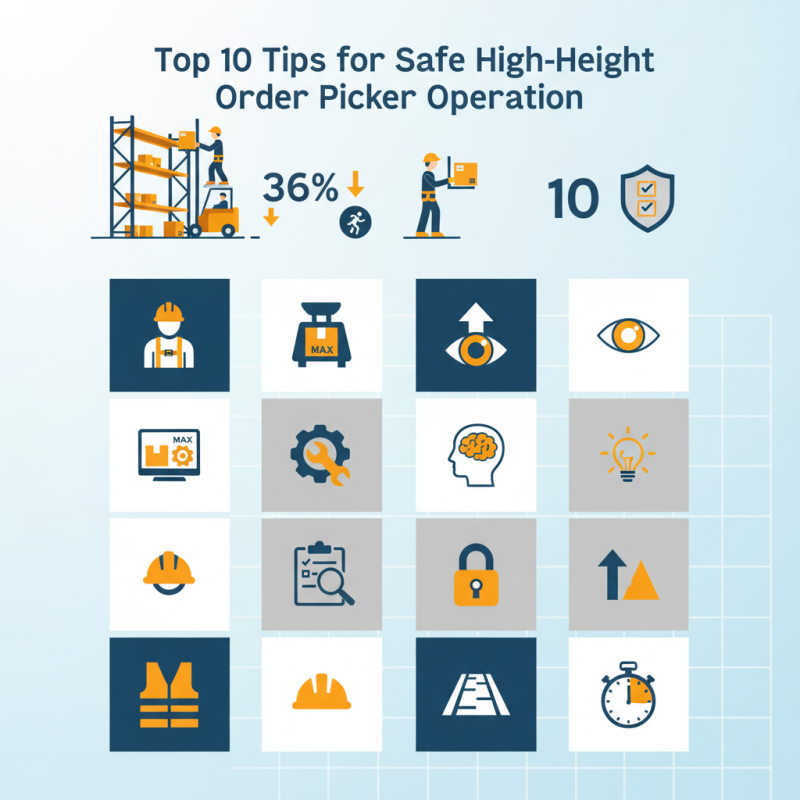
Top 10 Tips for Safe High-Height Order Picker Operation
Operating high-height order pickers can be risky if safety protocols aren't followed. Here are some tips to enhance safety during operations.
Always inspect the equipment before use. Make sure the order picker is in good condition. Look for any visible damage or wear. A well-maintained machine is crucial for safe operation. Ensure that all safety features, such as guardrails and emergency stops, function properly. Do not ignore this step; it could save your life.
Training is vital. All operators should be properly trained in using high-height order pickers. They must understand the risks and know how to handle them. Regular refreshers can help maintain high safety standards. Communication is also key. Operators should be aware of their surroundings and signal others when necessary. This can prevent accidents caused by blind spots or distractions.
Wear appropriate personal protective equipment (PPE). Helmets, harnesses, and non-slip footwear are essential. In a busy warehouse, the risk of falling objects is real. Take precautions to protect yourself. Being aware of these risks is important. Reflect on past incidents to improve safety measures.
Understanding High-Height Order Picker Safety Standards and Regulations
When operating high-height order pickers, safety standards and regulations are crucial. These guidelines ensure workers remain safe while handling materials at significant heights. OSHA regulations mandate proper training for operators. This training must cover equipment use, safety protocols, and emergency procedures. Operators should understand load limits, stability, and safe maneuvering.
Regular inspections are mandatory. Operators must ensure equipment functions correctly and report any defects immediately. Daily checks should include assessing brakes, lights, and steering systems. Safety gear is non-negotiable. Hard hats, harnesses, and non-slip footwear help prevent accidents. Providing adequate training and safety gear reduces risks significantly.
However, even with the best practices, human error can lead to issues. Workers must stay vigilant.
Emergency preparedness is key. Operators should know evacuation routes and have a plan in place for accidents. Awareness of surroundings is vital, as distractions can lead to oversights.
Operators often feel pressure to rush. This mindset can compromise safety. Cultivating a culture of safety first helps mitigate risks. Encouraging communication about unsafe conditions fosters a safer work environment.
Essential Pre-Operational Inspections for High-Height Equipment
Before operating high-height order pickers, thorough pre-operational inspections are crucial. Check the equipment for visible damage. Inspect the forks, controls, and safety features. Ensure that all lights and alarms function properly. Each of these components plays a critical role in safe operation. A small oversight can lead to significant safety hazards.
Tips for safe operation include maintaining a clear view while navigating. Use spotters when moving in tight areas. This prevents collisions and enhances awareness. Operators should undergo regular training to stay updated on best practices. Familiarity with emergency procedures is vital. Operators must be prepared for unexpected situations.
Even with inspections and training, mistakes can happen. Reflecting on past incidents can improve safety measures. Encourage a culture of reporting near misses. This openness fosters a safer workplace. Team collaboration is key in identifying hazards. Always prioritize safety over speed.
Top 10 Tips for Safe High-Height Order Picker Operation
| Tip No. |
Safety Tip |
Description |
Pre-Operational Inspection Items |
| 1 |
Wear Personal Protective Equipment |
Ensure appropriate PPE is worn at all times. |
Helmet, gloves, and safety shoes |
| 2 |
Check Equipment Before Use |
Conduct a thorough check of the order picker. |
Brakes, steering, lift controls |
| 3 |
Ensure Stable Load |
Verify that the load is balanced and secure. |
Load positioning and weight limits |
| 4 |
Maintain Clear Visibility |
Ensure a clear line of sight while operating. |
Mirrors and height adjustments |
| 5 |
Follow Operational Procedures |
Stick to the manufacturer’s operational guidelines. |
User manual reference |
| 6 |
Avoid Overloading |
Never exceed the equipment’s load capacity. |
Load capacity marking |
| 7 |
Use Safety Features |
Utilize all safety features available on the equipment. |
Emergency stop buttons |
| 8 |
Be Aware of Surroundings |
Keep an eye on the work area for hazards. |
Obstacles and pedestrian traffic |
| 9 |
Communicate Effectively |
Use hand signals or radios when necessary. |
Two-way radios |
| 10 |
Perform Regular Maintenance |
Schedule and document all maintenance activities. |
Maintenance schedule logs |
Significance of Proper Training for Operators in High-Height Environments
Proper training for operators in high-height environments is essential. In warehouses and fulfillment centers, workers often use order pickers to reach elevated stock. A study from the National Institute for Occupational Safety and Health (NIOSH) indicates that improperly trained operators face a significantly higher risk of accidents. Approximately 70% of falls from heights occur due to a lack of thorough training.
Effective training programs should cover equipment handling, hazard recognition, and safe operating procedures. According to the Occupational Safety and Health Administration (OSHA), workers trained in safe practices can reduce workplace accidents by up to 40%. This statistic emphasizes the need for consistent training and refreshers, particularly for new employees or those transitioning to different equipment types.
Moreover, experiential learning components can enhance retention. Simulation training can help operators practice in controlled, safe environments. Despite this, many facilities still overlook this practice. It is vital to address this gap, as even small lapses in operational safety can have dire consequences, both physically and financially, for the individuals and the organization. By investing in comprehensive training, companies can foster a safer work culture and enhance overall productivity.
Best Practices for Load Management and Stability in Order Picking
When operating high-height order pickers, load management is crucial for safety. One vital tip is to always secure the load before lifting. This minimizes the risk of items shifting during transport. Trust the stability of your picker by ensuring that it is rated for the load weight you are handling.
Another important aspect is the distribution of weight. Uneven weight can lead to instability, causing a dangerous tipping hazard. Arrange heavier items at the bottom and lighter ones on top. Always check your load before ascending. Simple inspections can prevent complex problems.
Communication among team members is key. If someone is nearby, let them know when you’re moving and where you plan to go. This not only helps in coordinating movements but also enhances awareness on the floor. Having a dedicated spotter can improve safety significantly. Relying on clear signals can help avoid potential collisions and mishaps. Safety is not an option; it’s a necessity in high-height order picker operation.
Emergency Procedures and Safety Protocols for High-Height Worksites
In high-height order picker operations, safety comes first. Emergency procedures must be clear and accessible. According to the Bureau of Labor Statistics, falls account for 31% of all workplace fatalities. Implementing strict safety protocols can significantly reduce these risks.
Regular training is essential. Workers should know how to respond during emergencies. This includes understanding how to safely evacuate from high altitudes. Knowledge of first aid can also be crucial. In a study by the National Safety Council, 50% of organizations reported enhanced worker confidence when they had emergency plans.
Equipment checks are equally important. Before each shift, operators should inspect their equipment. This helps prevent accidents caused by malfunctions. Yet, many overlook this step. A report by the Occupational Safety and Health Administration indicates that 20% of accidents occur due to equipment failure. Fostering a culture of safety and accountability is vital.
Conclusion
When it comes to how to safely operate an order picker at high heights, understanding safety standards and regulations is crucial. Operators must conduct essential pre-operational inspections to ensure the equipment is in optimal condition, which minimizes the risk of accidents. Proper training is also vital, educating operators about the specific challenges of high-height environments, allowing them to navigate safely and efficiently.
Moreover, implementing best practices for load management and stability is key to ensuring safe operations. Operators should be well-versed in emergency procedures and safety protocols specific to high-height worksites, as these guidelines help mitigate potential hazards. By following these ten tips, individuals can significantly enhance the safety and effectiveness of high-height order picker operations.
 LM Forklift
