LM Forklift
As industries strive for efficiency and sustainability, the question arises: "Why switch from diesel to electric forklifts?" According to industry expert Jane Smith, a leading figure in material handling, "Electric forklifts offer unmatched performance and lower operational costs." Her insights shed light on a shift that is becoming increasingly vital for businesses.
Electric forklifts present numerous benefits, but the transition is not without challenges. Businesses must consider factors such as initial investment and training staff on new technologies. However, transitioning can lead to significant savings. Electric models typically require less maintenance compared to their diesel counterparts, reducing downtime and service costs over time.
Environmental concerns also play a crucial role in this decision. Diesel forklifts emit harmful pollutants, contributing to air quality issues. Switching to electric options not only improves workplace safety but also aligns with corporate sustainability goals. As supply chains evolve, understanding "Why switch from diesel to electric forklifts" becomes essential for any business looking to maintain a competitive edge.
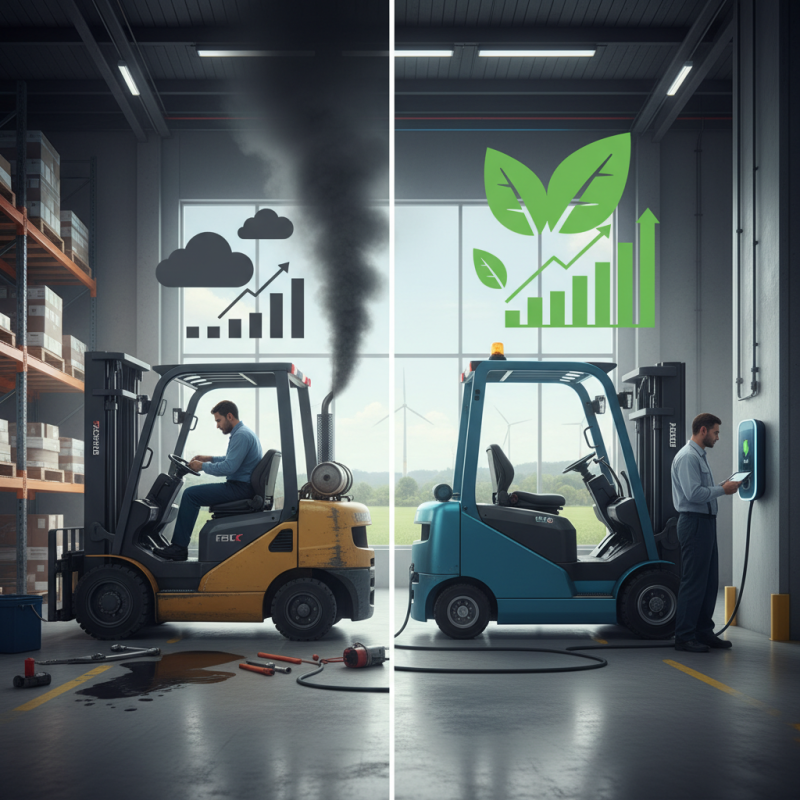
Switching from diesel to electric forklifts presents a significant opportunity for reducing emissions. According to the U.S. Environmental Protection Agency (EPA), electric forklifts can produce up to 80% fewer greenhouse gas emissions compared to diesel models. This transition is not just about compliance; it's a proactive step toward sustainability. The reduction in emissions contributes to better air quality and a healthier work environment.
Electric forklifts generate less noise pollution, enhancing worker comfort. The quiet operation means employees can communicate easily, leading to improved workplace efficiency. However, some facilities may still face challenges when adapting to electric forklifts. Factors like charging infrastructure and battery management need careful consideration. Companies must assess their operations to avoid potential pitfalls.
Tips: Train your team on battery maintenance. Regular checks can prevent unexpected downtime. Evaluate your electricity sources. Renewable energy can minimize overall emissions further. It's crucial to monitor energy consumption to ensure you're maximizing the benefits of your switch to electric. The initial costs of electric forklifts can be higher, but the long-term savings and environmental benefits are substantial.
Electric forklifts present significant cost-saving opportunities compared to diesel models. One of the most compelling factors is fuel savings. According to industry studies, electric forklifts can reduce fuel costs by up to 70%. Diesel prices are volatile, but electricity costs remain relatively stable. This unpredictable nature of diesel can result in unexpected expenses.
Maintenance is another area where electric forklifts excel. The absence of a combustion engine means fewer moving parts. Electric forklifts require less frequent servicing, which translates to reduced maintenance costs. Reports indicate that electric models can lead to annual savings of up to $3,000 in maintenance alone.
However, businesses should evaluate their specific needs before making a switch. Charging infrastructure can be an initial hurdle. Installation costs for charging stations might be high. Still, many companies find that long-term savings outweigh this initial investment. Analyzing total cost of ownership is essential for informed decision-making.
Electric forklifts are rapidly becoming the go-to choice for many warehouses and manufacturing centers. Their operator comfort and safety features significantly enhance productivity. Research from the Material Handling Industry Association shows that electric models reduce noise levels by up to 50%. This quieter operation allows operators to focus better and communicate more effectively.
Electric forklifts also offer ergonomic designs, including adjustable seating and clear visibility. A study from the Occupational Safety and Health Administration states that improved visibility can reduce accident rates by up to 30%. Operators report feeling less fatigued during long shifts. The reduced vibrations in electric forklifts also contribute to a more comfortable working experience.
**Tip:** Regular training on equipment usage helps maximize safety features. Ensure that all staff understand the capabilities of electric models.
One challenge with electric forklifts is battery management. While they offer many benefits, improper maintenance can lead to performance issues. Operators need to monitor battery life and charge schedules closely.
**Tip:** Implement a maintenance schedule to check battery health regularly. A proactive approach can prevent unexpected downtime.
Electric forklifts are rapidly gaining popularity over diesel models due to their enhanced energy efficiency. Electric power systems convert energy into motion more effectively than diesel engines. This efficiency translates into lower operational costs, especially for businesses with high forklift usage. With electric models, companies can optimize their energy consumption, leading to substantial savings.
Electric forklifts reduce energy waste significantly. Their drive systems are designed to minimize energy loss, particularly during braking. This regenerative braking feature captures kinetic energy, converting it back to electrical power. Additionally, electric forklifts generate less heat, which contributes to their overall efficiency. While diesel engines may perform well under heavy loads, they have higher fuel consumption.
However, it is worth noting that electric forklifts may require more frequent charging cycles, impacting their uptime. Finding a suitable charging infrastructure can also present challenges. Despite these considerations, electric forklifts offer a more sustainable choice. As companies aim to reduce carbon footprints, investing in electric technology becomes a logical step. Embracing this shift enhances not only operational efficiency but also environmental responsibility.
Switching to electric forklifts offers several advantages, especially regarding government incentives. Many governments provide financial support to businesses making this shift. These incentives can take the form of tax rebates, grants, or low-interest loans. This financial aid significantly lowers the initial cost of purchasing electric forklifts. Many businesses miss out on these benefits simply because they are unaware of the available programs.
Moreover, electric forklifts may qualify for additional programs aimed at promoting sustainability. States often have initiatives to reduce carbon footprints. By opting for electric machinery, companies can align with these eco-friendly policies. The incentives help offset the transition costs. However, companies must navigate various government channels to take full advantage of these opportunities. The process can be confusing and overly bureaucratic at times.
The transition from diesel to electric is often seen as daunting. Companies worry about the reliability of electric models. Some operations might not consider the maintenance costs of electric equipment, which are generally lower than their diesel counterparts. That’s where understanding the available incentives becomes crucial. It's essential to research local regulations and consult experts in the field. This way, businesses can make informed decisions and effectively benefit from the available financial support.
: Electric forklifts produce up to 80% fewer greenhouse gas emissions than diesel models. This supports better air quality.
Electric forklifts operate quietly. This enhances worker comfort and communication, improving workplace efficiency.
Companies need to assess charging infrastructure and battery management. These factors can create challenges for smooth transitions.
Yes, electric forklifts can reduce fuel costs by up to 70%. They also lower maintenance costs significantly, saving about $3,000 annually.
Diesel prices can fluctuate unpredictably, leading to unexpected expenses. Electricity costs tend to remain stable over time.
Electric forklifts convert energy into motion more effectively, resulting in lower operational costs and reduced energy waste.
This feature captures kinetic energy during braking. It converts that energy back to electrical power, enhancing overall efficiency.
They may require more frequent charging cycles, which can affect uptime. Charging infrastructure can also be a challenge.
Analyzing total costs helps businesses understand long-term savings versus initial investments when transitioning to electric forklifts.
Regular checks and team training are crucial. Proper maintenance can prevent downtime and maximize efficiency.
Switching from diesel to electric forklifts presents numerous advantages that businesses should consider. One compelling reason is the significant reduction in emissions associated with electric forklifts, promoting a cleaner and more sustainable work environment. Moreover, transitioning to electric models can lead to substantial cost savings on fuel and maintenance, as electric forklifts typically require less upkeep and benefit from lower energy costs.
Additionally, electric forklifts offer improved operator comfort and safety features, enhancing overall workplace efficiency. Their enhanced energy efficiency further solidifies the case for this switch, as electric models often outperform their diesel counterparts in various operational aspects. Furthermore, government incentives and rebates for adopting electric forklifts make the transition even more appealing. Overall, understanding "why switch from diesel to electric forklifts" reveals a strategic move towards sustainability and cost-effectiveness in modern logistics and warehousing.
