LM Forklift
Electric forklifts are essential in various industries for efficient material handling. But maintaining their safety and functionality is crucial. What is the daily inspection checklist for electric forklifts? This question is vital for operators and warehouse managers alike.
Industry expert Jane Smith, a safety compliance specialist, emphasizes the importance of daily inspections. She states, “Daily checks can prevent accidents and costly downtime.” A thorough checklist ensures that each forklift operates safely. It includes checking battery levels, inspecting tires, and ensuring that all safety features are functioning.
However, some operators overlook these inspections, assuming everything is fine. This negligence can lead to serious consequences. Regular checks promote not only safety but also extend the lifespan of the equipment. Through diligent inspections, businesses can serve their customers better and avoid unexpected breakdowns.
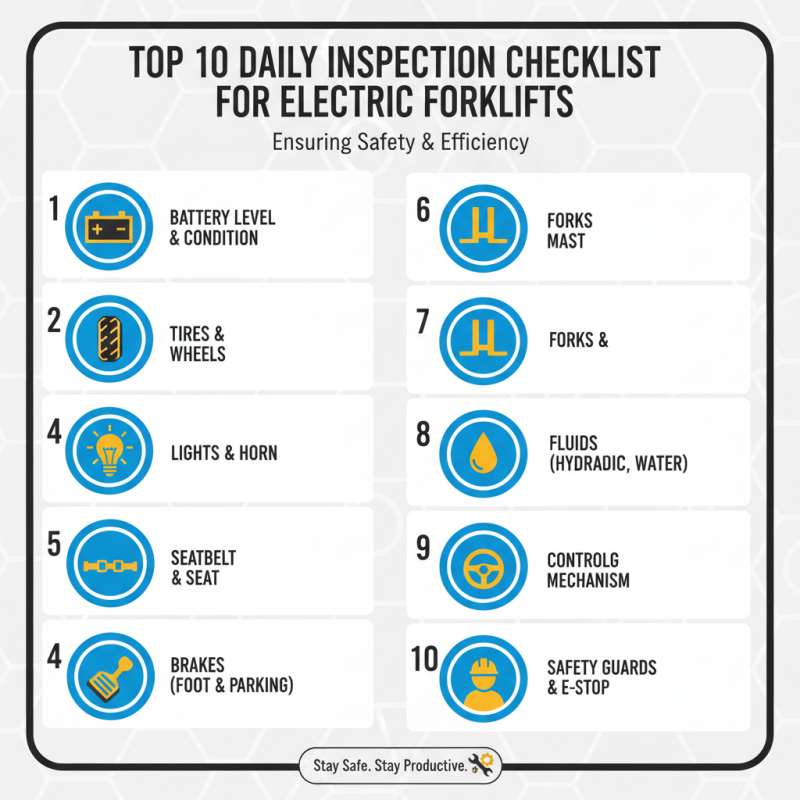
Daily inspections of electric forklifts are crucial for maintaining their safety and efficiency. According to the Occupational Safety and Health Administration (OSHA), proper maintenance can reduce accidents by up to 35%. Regular checks help identify potential issues before they escalate into problems that could harm operators or damage goods.
A clear checklist for daily inspections typically covers essential components, such as battery levels, forks, and safety features. Monitoring these aspects can prevent unexpected downtime and prolong the lifespan of the equipment. Data shows that forklifts that undergo regular inspections have an average operational lifespan of 10-15 years, compared to those that do not receive regular maintenance.
Tips for a successful inspection include always checking for leaks under the forklift. Inspect the tires for wear and pressure, as these are pivotal for stability. Conduct visual inspections of warning lights and alarms. Remember, a small oversight can lead to significant issues. Teaching operators the importance of daily checks creates a culture of safety in the workplace. Reliable performance depends heavily on consistent inspections.
Regular inspections are crucial for electric forklifts. Ensuring safety compliance relies on checking key components. Start with the battery. Inspect for leaks and corrosion. A damaged battery can lead to operational failures. Proper charging practices should be followed. This will extend the battery's lifespan.
Next, focus on the forks and mast. Look for signs of wear or cracking. Damaged forks can cause load instability. Ensure that they are aligned properly. The mast should move smoothly. Any grinding or resistance might indicate a need for maintenance.
Don’t overlook the operational features. Test the brakes and steering. Functionality in these areas is critical for safety. Listen for unusual sounds during operation. Any strange noise can signal a mechanical issue that requires attention. Regular checks prevent accidents and ensure smooth operations. Over time, consistently monitoring these aspects can contribute to a safer work environment.
Daily inspections of electric forklifts are crucial for safety and efficiency. Recent industry reports indicate that proper maintenance can reduce accident rates by up to 25%. Therefore, a thorough daily inspection is not only recommended but necessary. Operators should check the battery condition, ensuring it’s fully charged and free from damage. Inspecting the forks for cracks and wear is vital. Observing fluid levels also plays a role in maintaining operational safety.
The frequency of these inspections should match the usage intensity of forklifts. For heavy usage, a daily inspection is essential before the shift starts. A study found that 30% of accidents occurred due to equipment failure, which could have been avoided with regular checks. In situations where forklifts operate in harsh environments, additional inspections might be needed. Operators should log their inspections to track any emerging issues. The practice fosters accountability and ensures compliance with safety standards. Maintaining a proactive approach to inspections can lead to improved reliability and lower repair costs over time.
Electric forklifts play a critical role in warehouse operations. Regular inspections are essential to ensure safety and efficiency. According to a report by the Occupational Safety and Health Administration (OSHA), improper maintenance can lead to a high percentage of accidents. Common issues often found in electric forklift inspections include battery malfunctions, faulty brakes, and tire wear.
Battery problems are prevalent. About 25% of electric forklifts fail inspections due to battery issues. Inadequate charging practices can shorten battery life. Operators should ensure batteries are free from corrosion and properly charged. Additionally, regular checks on brake functionality are vital. Poorly functioning brakes can compromise safety. Regular brake inspections help identify wear and maintain response time.
Tire wear is another issue. Approximately 20% of all electric forklifts have tire-related problems, which can affect stability. Inspecting tire tread and pressure should be part of routine checks. Operators should not overlook this aspect, as it directly impacts handling. These inspections not only prevent accidents but also enhance the lifespan of equipment. Without diligent attention, these minor issues can escalate into serious problems. Regular inspections are beneficial for operational health and safety.
Conducting daily inspections of electric forklifts is crucial for safety and operational efficiency. Regular inspections help identify potential issues early, thus reducing maintenance costs. According to industry studies, organizations that implement rigorous inspection protocols can see a 25% decrease in workplace accidents.
Effective documentation of inspection results is equally essential. Clear records ensure compliance with safety regulations and facilitate audits. A checklist that includes battery status, tire condition, and safety features is necessary. Using technology to log inspections can enhance accuracy. Employing mobile apps can streamline this process, allowing real-time updates and accessibility.
Tips: Use consistent formats for documentation. This reduces confusion. Make sure to train staff adequately in inspection procedures. Teach them the importance of meticulous recording. Regular reviews of inspection records can highlight trends and recurring issues, prompting necessary action. Continuous improvement relies heavily on these insights and reflections.
| Inspection Item | Status (Pass/Fail) | Comments | Inspector Name | Date |
|---|---|---|---|---|
| Battery Condition | Pass | Fully charged and no leaks | John Doe | 2023-10-01 |
| Forks | Fail | One fork bent | Jane Smith | 2023-10-01 |
| Brakes | Pass | Functioning effectively | John Doe | 2023-10-01 |
| Tires | Pass | Good tread, no damage | Jane Smith | 2023-10-01 |
| Lights | Pass | All lights functioning | John Doe | 2023-10-01 |
| Hydraulics | Pass | No leaks, functioning well | Jane Smith | 2023-10-01 |
| Safety Features | Pass | Seatbelt and alarms work | John Doe | 2023-10-01 |
| Control Panel | Pass | All buttons functional | Jane Smith | 2023-10-01 |
| Chassis | Pass | No rust or damage | John Doe | 2023-10-01 |
| Warning Labels | Pass | Clearly visible | Jane Smith | 2023-10-01 |
: Daily inspections enhance safety and efficiency. They can reduce accident rates by 25%.
Inspect the battery, forks, mast, brakes, and steering for wear or damage.
Check for leaks, corrosion, and ensure it's fully charged before use.
Look for cracks, signs of wear, and ensure proper alignment to prevent load instability.
Heavy usage requires daily checks, while lighter use may allow for less frequent inspections.
Listen for unusual sounds during operation. Strange noises can indicate mechanical problems.
Log inspections to track issues. This fosters accountability and supports safety compliance.
Neglecting inspections can lead to accidents and increased repair costs over time.
Harsh operating conditions may require more frequent inspections to ensure safety.
Misaligned parts can lead to operational failures and jeopardize safety.
The article titled "Top 10 Daily Inspection Checklist for Electric Forklifts" outlines the critical importance of conducting regular inspections to ensure safety and compliance in warehouse operations. What is the daily inspection checklist for electric forklifts? It includes a comprehensive review of key components such as battery levels, brake functionality, fork conditions, and general visibility. These inspections not only help in identifying potential safety hazards but also enhance the longevity of the equipment.
The article also emphasizes the recommended frequency for conducting these inspections daily, along with common issues encountered, such as battery wear and tire condition. Solutions to these problems are provided, ensuring operators can maintain optimal performance. Additionally, best practices for documenting inspection results are discussed, highlighting the need for meticulous record-keeping to facilitate better maintenance and accountability in electric forklift management.
