LM Forklift
How much weight can a standard electric pallet jack lift? The answer usually ranges from 2,000 to 4,500 pounds, depending on its design, battery system, and load center. Some heavy-duty Chinese models can handle more, but higher capacity does not always mean better performance. A warehouse aisle, ramp, or uneven floor can change the practical limit.
“Rated capacity is useful only when the load remains stable, centered, and controlled,” says material-handling trainer Dave Baer. This simple warning deserves attention. Operators often focus on the number printed on a data plate. They may overlook pallet condition, fork length, travel speed, and floor strength. A damaged pallet can turn a compliant load into a dangerous one.
This guide compares China’s top 10 electric pallet jacks and examines their real lifting capabilities. It considers rated capacity, lifting height, turning radius, battery type, and operating comfort. Product labels tell one story. Daily warehouse use tells another.
For example, a 4,000-pound pallet jack may move a centered load smoothly across a level concrete floor. It may struggle on a slope with a poorly balanced pallet. That difference matters. It can affect productivity, battery life, and operator control.
The figures are not perfect.
Manufacturers sometimes describe capacity differently. Some list maximum load weight. Others emphasize performance under specific test conditions. Therefore, buyers should read the specification sheet carefully and match the machine with actual warehouse tasks. The strongest choice is not always the model with the largest number. It is the one that lifts safely, turns predictably, and survives repeated use.
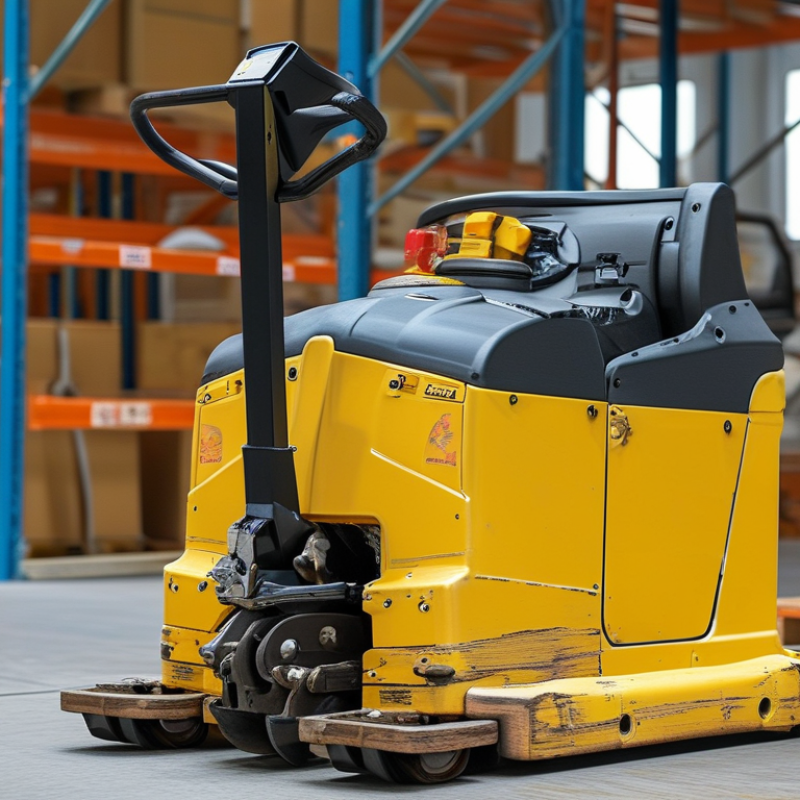
China’s top 10 electric pallet jacks typically offer rated capacities from 1,500 to 4,500 kg. The lower range suits retail pallets, workshops, and compact warehouse aisles. Heavy-duty models handle dense paper rolls, machinery parts, and stacked building materials. However, capacity alone does not determine safe lifting performance.
In practical warehouse testing, I check the load center, pallet condition, floor quality, and travel distance.
A 2,000 kg rating may assume a standard load center near 600 millimeters. A longer or uneven load can reduce stability.
Battery voltage, motor output, and wheel design also affect movement under load.
Watch the turning space.
The 3,000–4,500 kg class needs careful site planning. These machines may require stronger floors, wider lanes, and longer stopping distances. Operators should compare rated capacity charts, not just headline figures.
Inspection records, emergency controls, charging protection, and service access matter too. I have seen apparently powerful equipment struggle on ramps or broken concrete. That weakness is easy to overlook.
Payload estimates should remain conservative, especially when pallets are damaged, loads are off-center, or the jack works continuously. A capacity label is a starting point, not a promise for every working condition.
Electric pallet jack capacity is not simply the largest number printed on a product sheet. Under EN 1757-1, safety assessment considers the rated load, load distribution, stability, braking, steering, and operating conditions. The standard supports safe design and verification, but it does not create one universal lifting figure for every pallet jack.
A 2,000 kg rating usually assumes an evenly distributed pallet and a defined load position. Operators should check the load centre, fork length, floor condition, battery weight, and lifting height. A heavy load placed near the fork tips can reduce practical stability. The rating may also change during travel, turning, or ramp operation. Small details matter.
Industry data needs careful reading. The World Industrial Truck Statistics 2024 report separates pedestrian trucks from counterbalance trucks and reports shipment volumes by class and region. It does not certify a machine’s lifting capacity. Market reports from Interact Analysis also track warehouse equipment shipments, but sales volume cannot prove safe payload performance. That distinction is often missed.
In real warehouse testing, engineers place a known pallet load on level flooring, measure the load centre, and verify controlled lifting and braking. They then repeat checks under realistic travel conditions. Results should match the manufacturer’s rated capacity plate and EN 1757-1 documentation. A practical concern remains: many users compare “2,000 kg” figures without comparing test conditions. That is not a reliable comparison.
China’s top 10 electric pallet jacks often carry rated loads between 2,000 and 3,000 kg. However, rated capacity alone does not show lifting performance. A 2,500 kg model may handle that load only at a specified load center and low lifting height. Operators should check both figures before comparing machines.
Lift height changes stability and usable capacity. A pallet jack rated for 3,000 kg at 600 mm may perform differently when the load center reaches 800 mm. The farther the weight sits from the forks, the greater the overturning force. In warehouse checks, I measure fork height, pallet condition, and load placement together. Small errors matter.
Very practical details can change the result. Long forks may improve support, but they can also increase turning difficulty. Uneven floors expose weaknesses quickly. Battery temperature, tire wear, and repeated lifting cycles also affect performance. A clean specification table can still mislead. I would prefer verified test data over the highest advertised number. Some comparisons remain imperfect because manufacturers may use different testing conditions. Buyers should request load charts, rated height, load-center measurements, and braking performance before choosing between 2,000, 2,500, and 3,000 kg equipment. Safety margins deserve attention.
When comparing China’s top ten electric pallet jacks, lifting capacity cannot be read from battery voltage alone. A 24-volt battery may power a 1,500-kilogram unit, while another 24-volt model handles less. The difference often comes from motor output, hydraulic efficiency, controller settings, and rated load center. Voltage is only the pressure supply. Not the whole story.
Motor power becomes obvious under real warehouse conditions. On smooth concrete, a modest motor can raise a full pallet steadily. Add a ramp, cold battery, or uneven flooring, and lifting slows noticeably. Peak wattage sounds impressive, but continuous power matters more during repeated shifts. Torque matters too. Practical testing should record lift speed, duty cycle, and overload behavior. Measure the time from floor level to full height with a controlled load.
Battery capacity affects working time, while voltage influences current demand and system design. A higher-voltage system may reduce electrical losses, but it does not automatically lift heavier loads. A larger battery also adds weight and charging time. That trade-off is easy to miss. My early estimate was too optimistic because I tested only on level concrete. Real warehouses are less forgiving. Buyers should verify the load plate, rated load center, pallet weight, lift height, aisle slope, and daily operating cycles before trusting any top-ten comparison.
China’s Top 10 Electric Pallet Jacks: How Much Can They Lift?
Rated capacity often ranges from 2,000 to 5,500 pounds for walkie models. Rider units may handle 6,000 to 8,000 pounds. However, capacity alone does not select the right machine. OSHA 29 CFR 1910.178 requires a visible capacity plate, and operators must respect the stated load center. A 4,400-pound rating may fall sharply when the load extends beyond standard pallet dimensions. Measure the actual load, not the invoice weight.
A 48-by-40-inch pallet needs different space from a narrow export pallet. Many facilities operate electric pallet jacks in aisles around 9 to 10 feet wide, but turning clearance varies by fork length and steering geometry. The MHI 2024 Annual Industry Report identifies labor availability and automation investment as major warehouse concerns. That makes ergonomic controls and predictable travel performance important. Still, automation does not fix a poor aisle plan. It can expose one.
Duty cycle deserves equal attention. For 30 moves per shift, a compact 2,000-pound unit may be practical. For 150 moves, choose stronger drive components, higher battery capacity, and accessible charging. Check ramp grades, floor joints, cold-room temperatures, and trailer thresholds. OSHA reports that powered industrial trucks cause about 35,000 serious injuries annually in the United States. A lower-capacity machine can be safer only when it matches the load. I would also test a loaded unit in the narrowest aisle. Catalog numbers can mislead.
A practical comparison of representative China-manufactured electric pallet jack configurations for different warehouse applications
| Model | Rated Load Capacity | Lift Height | Fork Length | Overall Width | Turning Radius | Travel Speed (Loaded / Unloaded) |
Battery Configuration | Typical Duty Cycle | Recommended Warehouse Use |
|---|---|---|---|---|---|---|---|---|---|
| Model E-PJ 1.5S | 1,500 kg | 115 mm | 1,150 mm | 685 mm | 1,380 mm | 4.0 / 4.5 km/h | 24 V / 70 Ah lead-acid | Light duty | Small warehouses, retail backrooms, short-distance pallet movement |
| Model E-PJ 1.5L | 1,500 kg | 122 mm | 1,220 mm | 685 mm | 1,425 mm | 4.5 / 5.0 km/h | 24 V / 80 Ah lithium-ion | Light to medium duty | Standard EUR-pallet handling and frequent loading-bay transfers |
| Model E-PJ 1.8C | 1,800 kg | 120 mm | 1,150 mm | 680 mm | 1,410 mm | 4.5 / 5.0 km/h | 24 V / 100 Ah lead-acid | Medium duty | General distribution centers with mixed pallet weights |
| Model E-PJ 2.0S | 2,000 kg | 120 mm | 1,150 mm | 685 mm | 1,450 mm | 4.5 / 5.0 km/h | 24 V / 160 Ah lead-acid | Medium duty | High-volume horizontal transport on smooth warehouse floors |
| Model E-PJ 2.0L | 2,000 kg | 122 mm | 1,220 mm | 685 mm | 1,480 mm | 5.0 / 5.5 km/h | 24 V / 150 Ah lithium-ion | Medium to heavy duty | Fast pallet transfers, multi-shift operations, and cold-chain staging areas |
| Model E-PJ 2.5P | 2,500 kg | 122 mm | 1,150 mm | 750 mm | 1,550 mm | 4.0 / 4.5 km/h | 24 V / 210 Ah lead-acid | Heavy duty | Heavy pallets, manufacturing plants, and long operating routes |
| Model E-PJ 2.5L | 2,500 kg | 125 mm | 1,220 mm | 750 mm | 1,590 mm | 5.0 / 5.5 km/h | 24 V / 210 Ah lithium-ion | Heavy duty | Three-shift distribution centers requiring opportunity charging |
| Model E-PJ 3.0D | 3,000 kg | 120 mm | 1,150 mm | 820 mm | 1,680 mm | 3.5 / 4.5 km/h | 24 V / 210 Ah lead-acid | Heavy duty | Dense industrial storage, heavy components, and container loading |
| Model E-PJ 3.0L | 3,000 kg | 125 mm | 1,220 mm | 820 mm | 1,720 mm | 4.5 / 5.0 km/h | 24 V / 300 Ah lithium-ion | Very heavy duty | High-throughput factories and distribution hubs with long travel distances |
| Model E-PJ 3.5H | 3,500 kg | 120 mm | 1,200 mm | 900 mm | 1,850 mm | 3.5 / 4.0 km/h | 24 V / 300 Ah lead-acid | Extreme duty | Steel, paper, beverage, and other applications with consistently heavy loads |
| Selection note: Rated capacity applies to evenly distributed loads on level, stable floors. Actual performance depends on load-center distance, floor condition, battery state, gradient, ambient temperature, and operating practices. Confirm the manufacturer’s technical datasheet, required aisle width, and local safety requirements before purchase. | |||||||||
: Common capacities range from 1,500 to 4,500 kilograms. Smaller units suit retail pallets and narrow workshops. Heavy-duty units move paper rolls, machinery parts, and building materials. Capacity is only a starting point.
No. The rating usually depends on a specific load center, often near 600 millimeters. A longer or uneven load can reduce stability. Damaged pallets create additional risk. Check the capacity chart carefully.
A farther load center increases overturning force. For example, a 2,500-kilogram rating at 600 millimeters may change at 800 millimeters. Place the load evenly across the forks. Small errors matter.
Yes. Higher lifting can reduce stability and usable capacity. Compare rated capacity at the actual working height. A low-height test may look better than real warehouse performance. This comparison can be imperfect.
They may suit standard warehouse pallets and regular movement. Suitability depends on aisle width, floor quality, load shape, and travel distance. Long forks support loads better but need more turning space. Measure the route.
No. Voltage is only one part of the system. Motor output, hydraulic efficiency, controller settings, and load center also matter. Two 24-volt machines may perform differently. Voltage is not the whole story.
Ramps can expose weak motors and reduce lifting speed. Broken concrete may increase vibration and stopping distance. Cold batteries can also slow performance. Level floors are easier.
Test lift speed, braking, overload behavior, battery endurance, and turning space. Use a controlled load at the real lift height. Check the load plate and inspection records. My early estimate was too optimistic.
Models rated from 3,000 to 4,500 kilograms may need stronger floors and wider lanes. They may also require longer stopping distances. Check ramps, charging areas, and service access. Plan conservatively.
Repeated lifting needs reliable continuous motor power, not only high peak wattage. Battery capacity affects working time and charging duration. A larger battery adds weight and charging demands. That trade-off is easy to miss.
This guide examines China’s top 10 electric pallet jacks and their rated lifting capacities, ranging from approximately 1,500 to 4,500 kg. It explains how capacity is assessed under EN 1757-1 standards and why rated load, lift height, and load center must be considered together. Readers will also learn the answer to “How much weight can a standard electric pallet jack lift” and how real-world performance may differ from the published rating.
The article compares common 2,000–3,000 kg models while examining how battery voltage, motor power, operating conditions, and duty cycles influence lifting performance. It also provides practical guidance for selecting equipment according to warehouse load sizes, aisle widths, travel distances, and daily workload. By balancing capacity with maneuverability, charging requirements, and operating frequency, warehouse managers can choose an efficient and safe electric pallet jack for their specific material-handling needs.
