LM Forklift
Operating an order picker at height demands more than confidence and a valid training record. It requires disciplined preparation, controlled movement, and constant awareness of changing warehouse conditions. How to safely operate an order picker at high heights begins with understanding the machine’s limits, the worksite risks, and the manufacturer’s instructions.
Height changes everything. A small mistake can become a serious fall, collision, or dropped-load hazard. Before raising the platform, trained operators should inspect the tires, brakes, controls, guardrails, harness equipment, battery, and emergency systems. They should also check the floor for debris, uneven surfaces, spills, and nearby traffic. Small checks matter.
This guide presents seven practical safety tips for order-picker operations, based on accepted warehouse practices and guidance from equipment manufacturers and safety professionals. It explains how to position the machine, secure loads, use fall protection correctly, communicate with pedestrians, and respond to alarms or unstable conditions. Operators must follow site procedures and receive task-specific training before working independently.
The safest routine is not always the fastest. Experienced workers can still become complacent, especially during repetitive picking tasks. That human weakness deserves attention, not criticism. If visibility becomes poor, the load shifts, or the platform feels unstable, stop and reassess. Slow down. No production target justifies guessing at height. The details below are designed to support sound judgment, but they never replace a formal risk assessment, competent supervision, or the equipment’s operating manual.
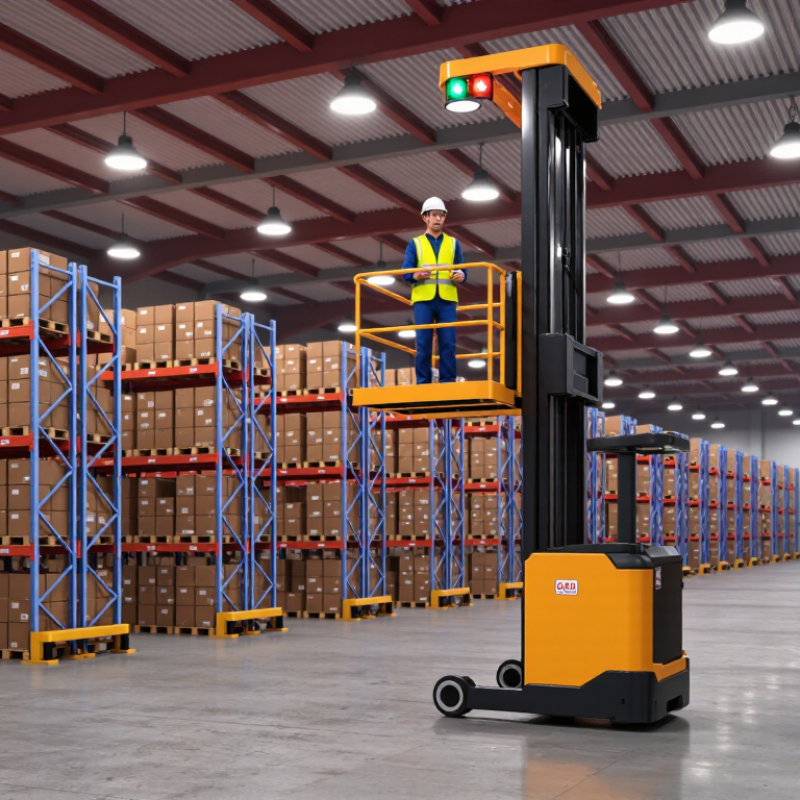
Working at height demands more than confidence. OSHA estimates that powered industrial trucks cause about 85 fatalities and 34,900 serious injuries each year. Before operating, confirm formal training, site authorization, and the machine’s rated capacity. Inspect the platform, guardrails, gate, tires, battery, warning devices, and emergency-lowering system. Do not skip small defects. They become serious above ground.
Never climb the rails or place a box beneath your feet. OSHA’s Powered Industrial Trucks guidance stresses operator training, inspections, and safe capacity limits.
Hands-on experience reveals a common weakness: operators may understand the rules but rush the controls. Pause before raising the platform. Keep the load balanced and within the marked capacity. Lower the platform before repositioning unless the equipment instructions permit otherwise. If visibility is blocked, stop and use a trained spotter. A checklist helps, but it is not perfect. Recheck conditions after aisle changes, spills, or unusual noise. The Health and Safety Executive also identifies poor planning, unstable loads, and inadequate training as recurring contributors to workplace transport incidents.
Before operating an order picker at height, inspect the machine with both feet on the ground. Check the forks, platform, guardrails, access gate, wheels, battery, and hydraulic lines. Look for cracks, loose fasteners, leaks, or damaged cables. Test the emergency stop, lift controls, lowering function, horn, and warning alarms. A control that feels “almost normal” deserves attention. Do not use the machine until a qualified person evaluates the defect.
Walk through the work area slowly. Confirm that the floor is clean, level, and strong enough for the machine. Remove shrink wrap, loose cartons, and other trip hazards. Measure overhead clearance around lights, sprinkler pipes, beams, and storage racks. Watch for pedestrians and moving equipment. Keep the travel path clear. I once underestimated a narrow aisle during a routine check; the mistake was small, but the risk was not. Recheck the route when stock or lighting changes.
Wear the required personal protective equipment before entering the platform. Use a properly fitted helmet, high-visibility clothing, safety footwear, and any site-required eye protection. If fall protection is required, inspect the harness, lanyard, connectors, and approved anchor point for cuts, wear, or missing labels. Keep the gate closed and remain inside the platform. Never stand on rails, boxes, or improvised steps. PPE cannot correct poor machine condition or careless positioning. Stop and report anything uncertain, even when production pressure feels urgent.
| Tip | Inspection Area | What to Check | Safe Condition | Required Action if Defective |
|---|---|---|---|---|
| 1 | Complete a pre-use machine inspection | Check tires or wheels, forks or platform, mast, guardrails, gates, chains, hoses, cables, battery, horn, lights, alarms, emergency stop, brakes, steering, and controls. | All components are secure, undamaged, clean, and operating as intended. No hydraulic leaks, exposed wiring, unusual noise, or warning indicators are present. | Do not operate the order picker. Lower the platform if possible, isolate or tag out the machine according to site procedure, and report the defect to an authorized person. |
| 2 | Verify the rated capacity and load | Read the machine data plate and confirm the combined weight of the operator, tools, materials, and containers. Check that the load is stable and evenly distributed. | The total load does not exceed the manufacturer’s rated capacity, and materials are secured within the designated work area. | Remove excess weight, redistribute the load, or use suitable material-handling equipment. Never rely on estimated capacity or counterweights. |
| 3 | Inspect the work surface and route | Look for holes, cracks, loose flooring, ramps, inclines, spills, debris, floor obstructions, uneven surfaces, and areas with insufficient load-bearing strength. | The travel and operating surface is firm, level or within the equipment’s permitted limits, clean, and capable of supporting the machine and its load. | Stop work and correct the surface condition, restrict access, or select another route. Do not drive over unprotected holes or unstable flooring. |
| 4 | Check overhead and surrounding clearances | Inspect ceilings, beams, sprinklers, lights, doors, pipes, racks, power lines, pedestrians, and other vehicles before raising or moving the platform. | There is adequate clearance for the machine, platform, operator, and load. Overhead electrical hazards are identified and controlled before work begins. | Maintain the required clearance specified by local regulations and the site risk assessment. Use a spotter or barricades where visibility is limited. |
| 5 | Use the fall-protection system correctly | Inspect the required harness, lanyard, anchorage connector, gate, guardrail, midrail, and toe board. Look for cuts, fraying, burns, corrosion, deformation, or missing parts. | The guardrail or approved restraint system is complete and secure. When required, the operator wears a properly fitted harness connected only to the designated anchorage point. | Remove damaged fall-protection equipment from service immediately. Do not attach a lanyard to guardrails, forks, racks, or other unauthorized points. |
| 6 | Control people, traffic, and visibility risks | Review pedestrian routes, vehicle traffic, blind spots, aisle width, lighting, warning signs, and communication methods. Keep the platform and controls free of obstructions. | Pedestrian and vehicle separation is established, the operating area is adequately lit, and the operator has a clear view or a trained spotter is available. | Set up barriers, warning signs, exclusion zones, or a spotter before operating. Stop immediately if pedestrians enter the restricted area. |
| 7 | Confirm operator readiness and emergency controls | Verify that the operator is trained and authorized for the specific equipment type. Review the manual, emergency-lowering procedure, battery or fuel hazards, and site rules. | The operator can identify the controls, alarm functions, emergency stop, emergency-lowering system, safe exit procedure, and reporting process. | Do not operate until training, authorization, and site-specific instructions are complete. In an emergency, follow the equipment manual and site emergency plan. |
| Important: Always follow the order picker manufacturer’s instructions, the equipment data plate, the employer’s risk assessment, and applicable local workplace-safety requirements. Never operate equipment with a known defect or bypass a safety device. | ||||
Mounting an order picker safely begins before your foot reaches the step. Inspect the tires, platform, guardrails, controls, emergency stop, and warning devices. Check the battery, fluid leaks, and visible damage. Follow the equipment manual and your site’s training procedure. Keep the floor dry, level, and free from pallets or loose wrapping. Slow down here.
Face the machine and use three points of contact while climbing. Keep both hands available when possible. Do not carry cartons onto the platform during mounting. Place materials in the approved storage area after entering. Close the gate, chain, or access barrier completely. Keep your body inside the guardrails. A fall-protection system may be required by the equipment design and workplace rules.
Before raising the platform, confirm the load stays within the rated capacity. Look above for beams, lights, pipes, sprinklers, and door frames. Check the travel path and warn nearby workers. Raise the platform gradually while watching for unusual movement or alarms. Never climb the rails or use boxes for extra height. Do not move the machine at elevation unless the manual specifically permits it. Even experienced operators can rush a familiar step. That mistake deserves attention. Keep the controls neutral when mounting or leaving, lower the platform fully, and remove the key when the picker is unattended.
Handling loads at height starts before the platform rises. Inspect the guardrails, entry gate, battery, tires, controls, and emergency lowering system. Confirm the load weight and height against the truck’s capacity plate. Keep the load centered, stable, and within the platform’s approved area. Never carry loose cartons that can shift or fall. Keep it low during travel.
Raise the platform only on level, firm flooring. Keep both feet inside the platform and maintain three points of contact when entering. Move slowly, especially near corners, racks, and blind intersections. Do not turn sharply with an elevated load.
OSHA training materials identify overturns as causing about 25% of powered industrial truck deaths. The U.S. Bureau of Labor Statistics recorded 865 fatal workplace injuries from falls, slips, and trips in 2022, representing 20.7% of all fatal work injuries. Stability deserves constant attention.
Use approved fall protection when required by the equipment manual and workplace assessment. Keep overhead clear of beams, sprinklers, and electrical hazards. Lower the platform before repositioning the truck. Stop and reset. A rushed correction can create more danger than the original mistake.
In practical training, operators often focus on height but overlook load movement. That habit needs challenging. If cartons lean, the floor feels uneven, or visibility disappears, pause, lower the platform, and request assistance. Record defects immediately and remove unsafe equipment from service until a qualified person inspects it.
Sources: OSHA Powered Industrial Trucks guidance; U.S. Bureau of Labor Statistics, Census of Fatal Occupational Injuries, 2022.
Operating an order picker at height requires patience, not speed. Before raising the platform, inspect the guardrails, access gate, wheels, controls, and emergency stop. Check the floor for oil, loose packaging, uneven surfaces, or overhead obstructions. A small defect can become serious once the platform is elevated.
Keep both feet inside the platform and secure all tools or cartons. Do not climb the rails or lean outside them. When the task ends, lower the platform completely before traveling or leaving the controls. It is easy to rush this step. That is where mistakes happen. Move to a designated parking area, apply the parking brake, and switch off the equipment according to site procedures. Keep the forks and platform clear of walkways, fire equipment, and emergency exits.
Report every hazard promptly to a supervisor or designated safety contact. Describe the location, equipment condition, and immediate risk clearly. A photo may help if site rules allow it. Do not continue using equipment with faulty brakes, damaged rails, warning alarms, or unstable movement. Tagging unsafe equipment can prevent another operator from trusting it by mistake. Even experienced workers miss details during busy shifts, so a second inspection is worthwhile. Supervisors should record the report, arrange qualified maintenance, and confirm the equipment is safe before returning it to service.
Check the forks, platform, guardrails, gate, wheels, battery, and hydraulic lines. Look for cracks, loose parts, leaks, and damaged cables. Test the emergency stop, lift, lowering controls, horn, and alarms. Do not operate equipment with uncertain defects.
Keep the floor clean, level, dry, and strong enough for the machine. Remove shrink wrap, loose cartons, and pallets. Check overhead clearance near lights, pipes, beams, sprinklers, and racks. Recheck the route after stock or lighting changes.
Wear a fitted helmet, high-visibility clothing, safety footwear, and required eye protection. Inspect fall protection before use. Check the harness, lanyard, connectors, and anchor point. PPE helps, but it cannot repair poor machine condition.
Face the machine and use three points of contact. Keep both hands available when possible. Do not carry cartons while climbing. Enter carefully, close the gate or barrier, and keep your body inside the guardrails.
Confirm the load stays within the rated capacity. Look above for beams, lights, pipes, sprinklers, and door frames. Warn nearby workers. Raise the platform slowly and watch for unusual movement or alarms.
Keep the load centered, stable, and inside the approved platform area. Do not carry loose cartons that may shift or fall. Keep loads low during travel. If cartons lean, stop and lower the platform.
Move it at height only when the equipment manual specifically permits it. Otherwise, lower the platform before repositioning. Travel slowly near corners, racks, and blind intersections. Avoid sharp turns with an elevated load.
Stop and investigate. A weak alarm, strange movement, or uneven floor may signal danger. Report the concern and remove the machine from service when necessary. I might miss something, so a second inspection can help.
How to safely operate an order picker at high heights begins with understanding the machine’s safety requirements, operating controls, load limits, and emergency procedures. Before use, inspect the order picker, platform, guardrails, wheels, controls, battery or power system, and surrounding work area. Confirm that the floor is stable, the travel path is clear, and all required personal protective equipment is properly worn and secured.
When mounting the machine, maintain three points of contact and keep the platform gate closed. Raise the platform smoothly and avoid sudden movements, overreaching, or stepping on guardrails. Keep loads balanced, within the rated capacity, and positioned to prevent shifting while working. Do not move the machine carelessly when elevated, and remain alert to overhead obstacles and nearby personnel. After completing the task, lower the platform fully, park on a suitable surface, apply the parking control, remove the key or disable the equipment as required, and report any damage, unsafe condition, or unusual behavior before the next use.
