LM Forklift
Training employees on electric order pickers is crucial for efficiency and safety in warehouse operations. According to a report by the Material Handling Industry of America, businesses that invest in proper training can see productivity improvements of up to 25%. This highlights the importance of learning how to train employees on electric order pickers effectively.
Mark Johnson, a leading expert in warehouse operations, emphasizes that “proper training reduces accidents and increases worker confidence.” His experience in training programs has shown that hands-on practice is essential. Employees must understand not only the machine’s operation but also safety protocols.
However, organizations often face challenges in delivering adequate training. Some employees may feel reluctant or overwhelmed by new equipment. It’s important to create a supportive environment that encourages questions and feedback. Regular assessments can help identify knowledge gaps and areas for improvement in training methods.
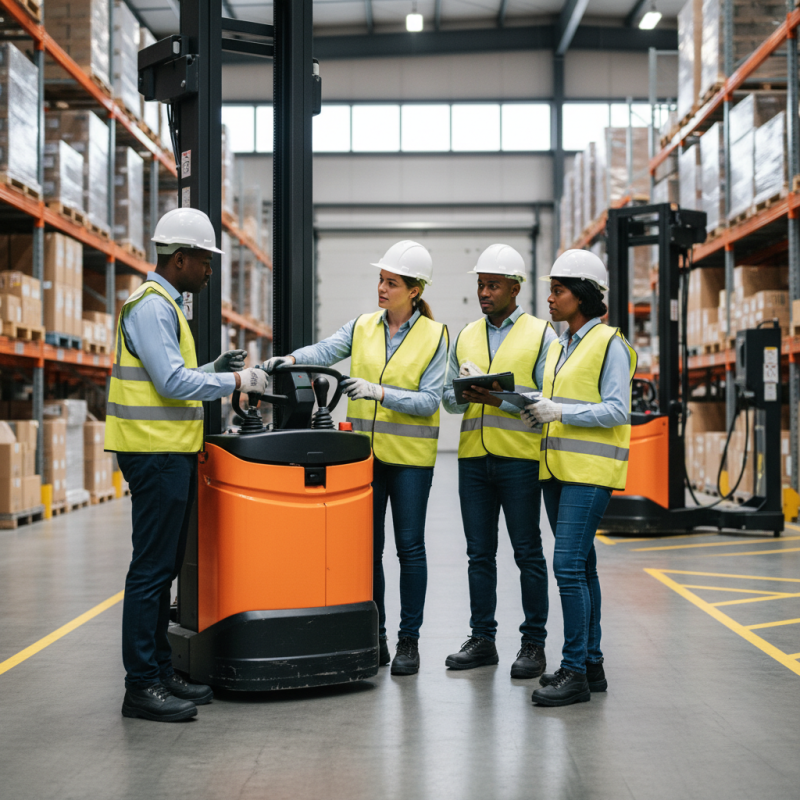
Electric order pickers are vital in modern warehouses. These machines enhance efficiency and accuracy. They combine the functionality of a lift and a forklift. With their ability to navigate tight spaces, they optimize storage. Reports indicate that using electric order pickers can increase order picking productivity by up to 30%. This efficiency is crucial for companies aiming for faster turnaround times.
Understanding features and benefits is essential. Electric order pickers typically have adjustable forks. This feature allows for easy handling of various loads. They also incorporate ergonomic designs to reduce operator fatigue. The reduced risk of injury can lead to lower healthcare costs and absenteeism. However, some operators may find the learning process challenging. A thorough training program is necessary to address this issue. Companies should ensure that employees better understand safety protocols and usage guidelines for maximum safety and efficiency.
Moreover, proper maintenance of electric order pickers can pose challenges. Regular inspections are necessary to avoid malfunctions that could disrupt operations. Employees should be trained to recognize signs of wear and perform basic checks. Failing to do so can lead to costly downtime. The emphasis on training and maintenance cannot be underestimated in optimizing warehouse operations.
Creating the right training environment for electric order picker instruction is vital. A well-organized and safe space fosters effective learning. Ensure the training area is adequately lit and free of obstructions. Located away from heavy traffic, it allows trainees to focus. Provide ample space for maneuvering the equipment. This enhances hands-on practice, which builds confidence.
Tips: Use visual aids in the training area. Diagrams or posters can illustrate key features of the electric order picker. Visual learning helps many individuals grasp concepts quickly. Additionally, ensure the equipment is in good working condition. Faulty machinery can lead to frustration and potential safety hazards.
Encourage trainees to ask questions and express concerns. An open atmosphere improves retention of information. Consider pairing experienced operators with novices. This mentorship ensures a seamless transfer of knowledge. Grounding training in real-world scenarios can highlight challenges trainees may face. Create mock situations that encourage problem-solving and critical thinking skills. Training should not just be about learning to operate machinery but also about understanding safety protocols and effective teamwork.
Training employees on electric order pickers is essential for workplace safety and efficiency. A comprehensive training program must address various aspects. According to the Occupational Safety and Health Administration (OSHA), around 70% of workplace accidents are attributed to insufficient training. This highlights the critical need for a structured approach to educating employees.
The training program should cover both theoretical knowledge and practical skills. Employees must understand how electric order pickers function, including their safety features. Hands-on training is vital. Studies indicate that hands-on experience increases retention rates significantly, with up to 75% of participants remembering what they learned in practical sessions compared to only 10% from lectures. Additionally, regular assessments can reveal knowledge gaps. Combining simulation exercises with real-life scenarios helps reinforce critical safety protocols.
Despite best practices, challenges persist. Many companies struggle with implementing consistent training. It's not uncommon to find employees undertrained or lacking confidence in operating the equipment. Therefore, fostering a culture of continuous improvement is crucial. Companies should encourage feedback from trainees to identify areas needing enhancement. This iterative process not only strengthens skills but also boosts employee morale.
Training employees on electric order pickers is crucial for efficiency. Practical hands-on training sessions play a vital role in this process. According to a report by the National Safety Council, proper training can reduce workplace accidents by up to 25%. This highlights the importance of investing in effective training strategies.
Hands-on training allows employees to gain real experience. Supervisors should create a safe environment where workers can practice manipulating electric order pickers. Use simulated scenarios that reflect actual working conditions. Employees learn better when they are active participants, not just listeners. Incorporating teamwork during training fosters collaboration and sharing of best practices.
Tips: Always ensure that the equipment is well-maintained before training. Instructors should provide immediate feedback to reinforce learning. Focus on common challenges faced in real situations. This makes training relatable and applicable. Reflect on what could be improved after each session. Continuous improvement is essential for effective training programs.
| Training Session | Duration (Hours) | Number of Participants | Key Focus Areas | Assessment Method |
|---|---|---|---|---|
| Introduction to Electric Order Pickers | 2 | 10 | Safety Procedures, Basic Operation | Written Quiz |
| Hands-On Operation | 3 | 8 | Controls Familiarization, Maneuvering | Practical Test |
| Obstacle Course Navigation | 4 | 6 | Precision Driving, Hazard Avoidance | Performance Evaluation |
| Maintenance and Troubleshooting | 2 | 10 | Basic Repairs, Daily Checks | Checklist Review |
| Final Assessment | 1 | All Participants | Overall Performance Review | Final Certification Exam |
When training employees on electric order pickers, evaluating their competency is crucial. According to the Occupational Safety and Health Administration (OSHA), improper operation of these machines can lead to serious workplace injuries. Regular assessments can highlight gaps in knowledge and skills. Observing employees during their shifts provides insight into their comfort level and control over equipment.
Feedback plays a significant role in employee development. Constructive criticism helps reinforce good practices and identify areas for improvement. A recent industry report revealed that companies investing in employee training see a 24% increase in productivity. Tailored feedback sessions, combined with hands-on training, ensure that employees are competent and confident.
Tips: Encourage open communication during feedback sessions. Employees should feel safe discussing challenges. Incorporate technology, such as simulation software, to create realistic scenarios for practice. Reflect on past training outcomes; what worked well, and what didn’t? Regularly update training approaches based on employee performance and changing industry standards.
: Electric order pickers enhance warehouse efficiency. They increase order picking productivity by up to 30%. They also navigate tight spaces easily.
Adjustable forks allow for the handling of various loads. This contributes to greater flexibility in storage operations.
Training reduces workplace accidents caused by insufficient knowledge. Comprehensive training programs can significantly improve safety and efficiency.
Some operators may struggle with learning. A thorough training program is vital to overcome these challenges.
Regular inspections are necessary to avoid malfunctions. Companies should train employees to recognize wear signs and perform basic checks.
Hands-on training increases retention rates. Practical sessions can lead to up to 75% of participants remembering their training.
Feedback is crucial for identifying knowledge gaps. It helps in reinforcing good practices and improving employee performance.
Incorporating technology, like simulation software, creates realistic scenarios. This boosts confidence and skill in using electric order pickers.
Many companies struggle with providing adequate training. Undertrained employees may feel insecure, impacting overall performance.
Regularly reflect on past training outcomes. Update methods based on employee performance and industry changes to remain effective.
Training employees on electric order pickers is essential for improving warehouse efficiency and safety. Understanding the features and benefits of electric order pickers lays the groundwork for effective training. It is crucial to prepare a conducive training environment that simulates real-life situations. A comprehensive training program should be developed, incorporating both theoretical knowledge and practical skills. Hands-on sessions allow employees to operate the equipment under supervision, fostering confidence and proficiency.
To ensure that the training is effective, evaluating employee competency is vital. This can be achieved through assessments and direct observation during practical sessions. Providing constructive feedback helps employees to recognize areas for improvement and reinforces their learning. By systematically addressing these elements, businesses can answer the question of how to train employees on electric order pickers effectively, leading to enhanced productivity and workplace safety.
