What Are the Common Causes of Forklift Motor Failure?

Time:2026-10-19 Author:Mason
0%

What are the common causes of forklift motor failure? This question matters whenever a truck loses power beside a loading dock, with pallets waiting and warning lights flashing. The answer usually involves several connected problems. Poor lubrication can increase friction inside the motor. Contaminated oil may carry dust, metal particles, or moisture through sensitive components. Overheating can also damage insulation, bearings, and electrical connections. Small faults often become expensive failures.

Forklift maintenance expert Mike Punter explains, “A motor rarely fails without warning; temperature, noise, and performance usually change first.” This practical observation reflects what technicians often see during inspections. A motor that sounds rough during lifting may have worn bearings. A burning smell can indicate electrical overheating. Slow acceleration may point to weak batteries, damaged cables, controller problems, or excessive mechanical resistance. Incorrect charging can worsen battery-related motor stress. Heavy loads and steep ramps add further strain.

Maintenance records provide important evidence. Technicians should check operating hours, service intervals, fault codes, fluid condition, battery voltage, and cooling airflow. Yet diagnosis is not always simple. A failed motor may only be the final symptom. The real cause could be poor ventilation, neglected cleaning, incorrect alignment, or repeated overloading. I may overlook something without testing the complete system. That is why experienced professionals combine visual checks, electrical measurements, manufacturer specifications, and operating history before recommending repairs. Careful prevention is less dramatic, but it protects productivity, equipment value, and worker safety.
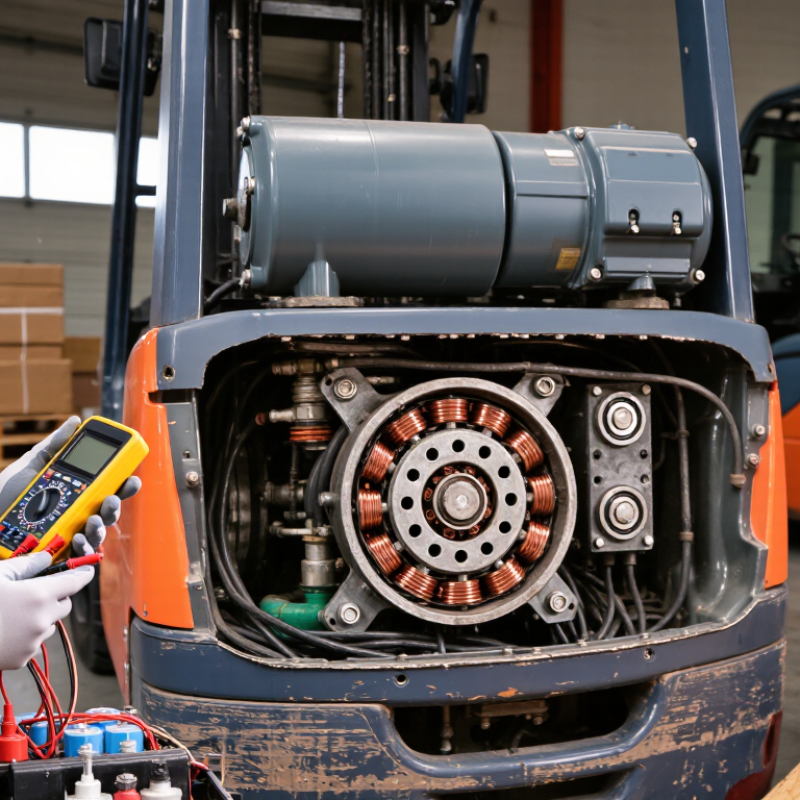
What Are the Common Causes of Forklift Motor Failure?

Forklift Motor Failure: Definition and Warning Signs

Forklift motor failure means the motor can no longer produce steady power for travel or lifting. It may stop completely, but failure often develops gradually. In maintenance inspections, a weak motor can sound normal while losing torque under load. That makes early diagnosis important.

Warning signs include slow acceleration, uneven movement, and a lifting cycle that feels unusually weak. Listen for grinding, clicking, or a high-pitched electrical whine. Feel the motor housing carefully after shutdown. Excessive heat, a sharp burnt smell, or discolored wiring needs attention. Battery drain may also increase. Check the control display for fault codes, but do not rely on codes alone. Physical evidence often tells a different story.

Common causes include overloaded operation, blocked cooling paths, moisture, dust, worn brushes, damaged bearings, and loose electrical connections. Low battery voltage can make the motor work harder and overheat. Poor charging habits may add stress over time. In one practical inspection, a thin layer of debris around the cooling vents explained repeated shutdowns. It looked harmless. It was not. A vibration that appears only during lifting can point to bearing wear or misalignment. Record the temperature, noise, load, and operating time before maintenance begins. Stop using the forklift when smoke, severe heat, or sudden power loss appears. Guessing can turn a minor repair into extensive damage.

Electrical and Battery-Related Causes of Motor Failure

Electrical and Battery-Related Causes of Forklift Motor Failure

Electrical faults are frequent contributors to forklift motor failure. Loose battery terminals increase resistance and create heat during acceleration. Corroded connectors can produce voltage drops that seem like motor weakness. In field inspections, technicians often find damaged cables hidden beneath protective covers. Sometimes, the motor is blamed too quickly. The real fault may sit in a connector, fuse, contactor, or controller.

Battery condition matters greatly. The U.S. Department of Energy’s Energy Storage Handbook reports typical lead-acid round-trip efficiency near 70–85%, while lithium-ion systems can exceed 90%. Poor charging practices waste energy and increase thermal stress. Undercharging encourages sulfation in lead-acid cells. Overcharging raises electrolyte temperature and can damage internal components. A battery may show acceptable voltage at rest, then collapse under load. That detail is easy to miss.

Voltage imbalance is another warning sign. A single weak cell can force the motor controller to work harder. Heat then builds around windings, brushes, and switching components. OSHA estimates that powered industrial trucks contribute to about 85 workplace fatalities and 34,900 serious injuries annually in the United States. These figures do not prove motor failure causes accidents, but they show why electrical checks require discipline. Measure voltage under load, inspect cable temperature, and record charging history. Guesswork remains common. It should not.

What Are the Common Causes of Forklift Motor Failure? - Electrical and Battery-Related Causes of Motor Failure

Cause How It Causes Motor Failure Common Warning Signs Recommended Diagnostic Checks Corrective or Preventive Action
Low battery state of charge A deeply discharged battery cannot provide the voltage and current required by the traction motor. The motor may draw higher current, increasing heat and reducing performance. Slow acceleration, reduced lifting or travel speed, voltage alarms, and motor heating during demanding work. Measure battery voltage under load and compare the result with the forklift manufacturer’s specifications. Inspect the battery state-of-charge indicator. Recharge according to the approved charging procedure and avoid operating the truck after the low-charge warning appears.
Aged or damaged battery cells Weak or shorted cells create voltage imbalance and may cause excessive current demand. The motor controller can also shut down to protect the electrical system. Short operating time, rapid voltage drop, uneven cell readings, and repeated low-voltage faults. Check individual cell or module voltages, battery capacity, electrolyte condition where applicable, and signs of swelling, leakage, or overheating. Have the battery tested by a qualified technician and replace defective components in accordance with the battery manufacturer’s requirements.
Loose or corroded battery connections High-resistance connections restrict current flow and generate heat. Voltage can drop at the motor input even when the battery itself is adequately charged. Intermittent operation, arcing, hot terminals, burning odor, flickering indicators, or unexpected shutdowns. Perform a visual inspection and voltage-drop test under load. Check cable lugs, terminals, connectors, and the battery plug. Isolate power safely, clean approved connection surfaces, tighten connections to the specified torque, and replace damaged cables or connectors.
Incorrect charging or charging-system faults Overcharging, undercharging, or an incorrectly matched charger can reduce battery capacity and create unstable power for the motor and controller. Excessive battery temperature, unusual gassing in flooded batteries, incomplete charging, or repeated charger fault codes. Verify charger output, charging duration, battery type, connector condition, and charging-area ventilation. Use the correct charger profile, follow the battery charging schedule, and service the charger according to electrical safety procedures.
Motor controller or power-module failure The controller regulates current and motor speed. Failed switching devices, damaged control circuits, or software-related faults can prevent the motor from operating correctly. No travel, jerky acceleration, fault codes, limited speed, or a motor that works intermittently. Read diagnostic codes, inspect controller wiring, confirm input voltage, and test control signals using approved service equipment. Repair or replace the controller only after confirming the battery, wiring, switches, and motor are serviceable.
Blown fuse or damaged contactor A fuse may open because of a short circuit or excessive current. A worn contactor may fail to close, open under load, or develop high contact resistance. Complete loss of motor power, clicking without movement, visible contact damage, or recurring fuse failure. Check fuse continuity, contactor coil voltage, contact resistance, and the circuit for short circuits before installing a replacement fuse. Correct the underlying electrical fault and replace protective devices or contactors with parts of the specified rating.
Damaged wiring or insulation Abrasion, crushed cables, moisture, or deteriorated insulation can cause short circuits, intermittent signals, and excessive resistance in motor circuits. Intermittent faults, blown fuses, exposed conductors, error codes, or motor operation that changes when the truck moves. Inspect cable routing and harness supports, test continuity and insulation resistance when appropriate, and check for moisture ingress. Repair or replace damaged harnesses, secure cables away from moving parts, and keep electrical compartments clean and dry.
Motor overheating Continuous heavy loads, restricted airflow, excessive current, or mechanical resistance can raise winding and bearing temperatures and damage insulation. Hot motor housing, thermal cut-outs, reduced performance, unusual odor, or repeated shutdown after extended operation. Check motor temperature, current draw, cooling passages, duty cycle, bearings, brakes, and drive-train resistance. Allow cooling, remove obstructions, correct mechanical drag, maintain the approved duty cycle, and investigate abnormal current draw.
Moisture, dirt, or chemical contamination Contamination can lower insulation resistance, corrode terminals, obstruct cooling, and create electrical leakage or short circuits. Corrosion, damp connectors, erratic operation, ground-fault indications, or visible dust and residue near the motor. Inspect the motor and connectors, test insulation resistance when specified, and identify the source of water, dust, or chemical exposure. Clean using approved methods, replace contaminated components, improve sealing or housekeeping, and avoid directing high-pressure water at electrical parts.

Safety note: Electrical diagnosis, battery servicing, and motor repairs should be performed by trained personnel using the forklift service manual, appropriate test equipment, and applicable workplace safety procedures.

Mechanical Problems That Damage Forklift Motors

What Are the Common Causes of Forklift Motor Failure?

Mechanical Problems That Damage Forklift Motors

Forklift motors often fail because small mechanical faults remain unnoticed. Worn bearings create heat, noise, and shaft movement during operation. That movement can damage seals, couplings, and internal winding connections. A loose motor mount causes vibration through the entire powertrain. It seems minor, but repeated vibration can crack fasteners and distort alignment.

Misaligned shafts place uneven pressure on bearings and couplings. Technicians should inspect coupling gaps, shaft runout, and mounting bolts. Overloaded forklifts create another serious risk. Excessive weight forces the motor to work beyond its normal mechanical range. Steep ramps and sudden acceleration increase this strain. The motor may still run, but internal wear has already started.

Poor lubrication can seize bearings or leave metal surfaces scored. Too much lubricant can also trap dust and raise operating temperatures. Cooling fans may bend, clog, or lose blades after impact. Restricted airflow allows heat to build around the motor housing. Debris near rotating parts can damage insulation or block movement. Tire problems and dragging brakes also make the motor work harder than expected.

A careful inspection should include unusual sounds, vibration levels, temperature, and mounting condition. Do not rely only on fault codes. They can miss developing mechanical damage. In practice, maintenance records are not always complete, and that complicates diagnosis. Checking the physical evidence may reveal more than replacing parts too quickly.

Effects of Poor Maintenance and Operating Conditions

What Are the Common Causes of Forklift Motor Failure?

Poor maintenance is a major cause of forklift motor failure. Dust, oil, and moisture can collect around cooling vents and electrical connections. Restricted airflow raises motor temperature during ordinary warehouse work. Worn bearings may produce a sharp hum or noticeable vibration. Loose terminals can create resistance, heat, and intermittent power loss. A small fault can become expensive.

Operating conditions also place heavy stress on the motor. Frequent overloading forces the motor to draw more current than expected. Steep ramps, uneven floors, and constant stop-and-start movement increase heat buildup. Cold storage can reduce battery performance, while humid areas may encourage corrosion. Water entering the motor housing is especially dangerous. The warning may appear later.

Watch the details.

A burning smell, weak acceleration, or unusual noise deserves prompt inspection. Technicians should check current draw, connections, cooling passages, and bearing condition. Cleaning must follow the equipment manual, because excessive air pressure can push debris deeper inside. Maintenance records should include operating hours and repeated fault patterns. A checklist helps, but it is not perfect. In busy facilities, rushed inspections sometimes miss early symptoms. Reviewing those missed signs can improve future maintenance decisions.

What Are the Common Causes of Forklift Motor Failure?

Effects of poor maintenance and operating conditions

Poor preventive maintenance is the leading contributor to forklift motor problems, followed by improper operation and battery or charging issues. Regular inspections, correct load handling, clean cooling components, and proper charging practices can significantly reduce overheating, electrical faults, and premature motor wear.

Methods for Diagnosing and Preventing Motor Failure

Forklift motor failure often begins with heat, contamination, poor lubrication, or electrical overload. Dust can block cooling passages, while low fluid levels increase friction inside the motor. Loose terminals may create resistance and heat. Repeated overloading also strains windings, bearings, and couplings. Warning signs include slow lifting, unusual vibration, burning odors, and intermittent power loss. Small changes matter.

Accurate diagnosis starts with a visual inspection and a clear maintenance history. Check cables, fuses, connectors, cooling fans, fluid levels, and mounting bolts. Then measure voltage, current draw, insulation resistance, and temperature under controlled conditions. Compare readings with the service manual’s limits.

Do not rely on sound alone. A noisy bearing may hide an alignment problem, but the first test is not always the right test. An incorrect meter setting can also produce misleading results.

Prevention depends on consistent inspections rather than emergency repairs. Keep ventilation openings clean and remove oil or dust buildup before it hardens. Inspect terminals for discoloration and tighten them to the specified torque. Use the correct lubricant and replace filters at scheduled intervals.

Train operators to avoid sudden acceleration, excessive loads, and deep discharge when applicable. Record motor temperatures and recurring fault codes. A useful record may reveal a pattern that one inspection misses. Maintenance plans are never perfect, and overlooked details sometimes return as expensive failures.

FAQS

What does forklift motor failure mean?

It means the motor cannot provide steady power for travel or lifting. Failure may develop gradually. It may still sound normal.

What warning signs suggest motor trouble?

Watch for slow acceleration, uneven movement, weak lifting, unusual vibration, or intermittent power loss. Grinding and clicking sounds matter. So does excessive heat.

What should operators check after using the forklift?

After shutdown, carefully check the motor housing for unusual heat. Notice burnt smells, discolored wires, and increased battery drain. Physical evidence can disagree with fault codes.

How can electrical problems weaken the motor?

Loose terminals create resistance and heat during acceleration. Corroded connectors can cause voltage drops. Damaged cables, fuses, contactors, or controllers may be responsible.

Can the battery cause motor failure?

Yes. A battery may show normal voltage at rest but collapse under load. Undercharging can damage lead-acid cells. Overcharging increases heat and stresses components.

What conditions commonly damage a forklift motor?

Overloading, blocked cooling paths, moisture, dust, worn brushes, poor lubrication, and damaged bearings can contribute. Low battery voltage also increases motor strain.

How should technicians diagnose a weak motor?

Begin with a visual inspection and maintenance history. Check cables, connectors, fuses, fans, fluid levels, and mounting bolts. Measure voltage, current, insulation resistance, and temperature under controlled conditions.

What should happen when severe symptoms appear?

Stop using the forklift after smoke, severe heat, or sudden power loss. Record the load, temperature, noise, and operating time. Guessing can worsen a small repair.

How can motor failure be prevented?

Keep vents clean and remove hardened dust or oil. Tighten terminals to the specified torque. Use correct lubricants and follow service intervals. Train operators to avoid sudden acceleration and excessive loads.

Are maintenance plans always reliable?

No. Overlooked details can return as expensive failures. Recurring fault codes and temperature records may reveal patterns. Still, one inspection can miss something. Recheck uncertain findings.

Conclusion

Forklift motor failure occurs when the motor can no longer deliver stable power, causing symptoms such as slow movement, unusual noise, overheating, burning odors, reduced lifting performance, or unexpected shutdowns. What are the common causes of forklift motor failure? Frequent reasons include weak or damaged batteries, loose electrical connections, faulty chargers, excessive voltage fluctuations, and moisture or contamination in electrical components. These problems can prevent the motor from receiving the consistent power it needs.

Mechanical issues, including worn bearings, damaged gears, poor lubrication, misalignment, and blocked cooling systems, can also place excessive stress on the motor. In addition, irregular maintenance, overloaded operation, long working periods, harsh environments, and improper driving habits may accelerate wear. Regular inspections, battery testing, connection checks, cleaning, lubrication, temperature monitoring, and timely replacement of worn parts can help detect problems early. Operators should also follow load limits, allow appropriate cooling time, and keep accurate service records to reduce the risk of serious motor damage and unexpected equipment downtime.

Mason

Mason

Mason is a seasoned marketing professional with a deep expertise in the company's offerings and a passion for driving brand awareness. With a strong background in digital marketing strategies, he has an innate ability to connect with diverse audiences and effectively communicate product benefits.......