When choosing forklift batteries, many face a crucial decision: lead acid or lithium options? Understanding this choice requires insight into both technologies. According to the Battery University, lead acid batteries have dominated the industry for decades, offering reliability and lower initial costs. However, lithium batteries are gaining traction due to their efficiency and longevity.
What is the difference between lead acid and lithium forklift batteries? Lead acid batteries typically require regular maintenance and have a shorter lifespan. They can last around 1,500 cycles, while lithium batteries may exceed 5,000 cycles. The National Renewable Energy Laboratory highlights that lithium batteries can also charge faster and operate in wider temperature ranges.
While lead acid may fit traditional budgets, lithium presents a promising long-term investment. Customers must weigh the upfront costs against the total lifecycle expenses. Various industry reports suggest companies that switch to lithium can see significant productivity gains. Still, businesses should reflect on their unique needs before making a decision. Their choice must align with operational demands and financial considerations.
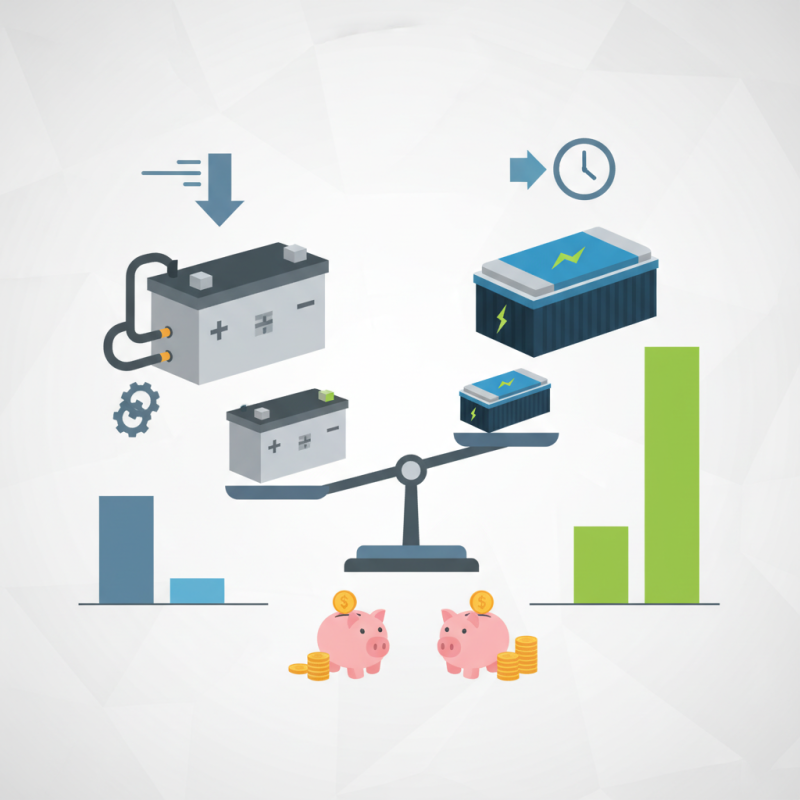
Overview of Forklift Battery Types: Lead Acid vs. Lithium
When considering forklift battery options, lead acid and lithium batteries each have distinct characteristics. Lead acid batteries are widely used, especially in industrial applications. They are known for their affordability and robustness. Approximately 70% of forklifts in the market utilize lead acid technology because of its lower initial cost. However, lead acid batteries require regular maintenance, including watering and equalization charges, which can be labor-intensive and time-consuming.
On the other hand, lithium batteries are gaining popularity. They offer quick charging times and longer life spans. Some studies indicate that lithium batteries can last three times longer than lead acid options. This efficiency provides a significant advantage for companies looking to increase operational uptime. Yet, the higher initial investment can be a barrier for some organizations. Additionally, while they have fewer maintenance needs, understanding the technology is crucial for maximizing their benefits.
Battery choice impacts productivity. Maintaining a lead acid battery can lead to downtime if employees are not trained properly. In contrast, switching to lithium can reduce energy consumption by about 30%, but initial costs may require careful budgeting. An informed decision should factor in both financial and operational implications to ensure a suitable fit for each unique operation.
Key Considerations for Choosing a Forklift Battery
When choosing a forklift battery, several key factors come into play. Lead acid batteries are durable and cost-effective. They have a proven track record in many industrial applications. According to industry reports, around 70% of forklift users still opt for lead acid due to low upfront costs. However, these batteries require maintenance and regular water topping to function optimally. Their lifespan is often limited to about 1,500 charge cycles.
On the other hand, lithium batteries are gaining traction. They offer a higher energy density and faster charging times. Research indicates that lithium batteries can last up to 5,000 charge cycles. Their maintenance is minimal, often requiring only periodic inspections. This makes them appealing for businesses aiming to improve operational efficiency. However, the initial investment is significantly higher, around 30-40% more than lead acid options.
Battery selection should also consider specific needs for power and run time. Understanding the typical usage of the forklift plays a crucial role. If the operations involve long hours, lithium may be the better option. But if budgets are tight, lead acid might be the choice, even if it comes with additional maintenance requirements.
Performance Comparison: Lead Acid vs. Lithium Batteries
When comparing lead acid and lithium batteries for forklifts, performance varies significantly. Lithium batteries often last longer, with a lifespan of up to 5,000 cycles compared to 1,500 cycles for lead acid. This means less frequent replacements, leading to lower total cost over time. Additionally, lithium batteries recharge faster. They can reach 100% capacity in about 1 to 2 hours, unlike lead acid, which usually requires 8 to 12 hours. Such efficiency can enhance productivity in busy operations.
Energy density also differs between the two. Lithium batteries have a higher energy density, allowing them to store more energy in a smaller space. This translates to lighter forklifts with more load capacity. Industry reports indicate that lithium batteries deliver up to 50% more operational efficiency than lead acid. However, the upfront cost of lithium batteries is often higher. This may deter some businesses from making the switch, despite their long-term benefits.
Maintenance needs are another crucial factor. Lead acid batteries require regular watering and specific charging techniques to ensure optimal performance. In contrast, lithium batteries need minimal maintenance. Users can overlook the charging process, making day-to-day operations smoother. Some companies still hesitate due to the initial investment, which could limit the adoption of newer technologies. Balancing these considerations is essential for businesses aiming for efficient and cost-effective forklift operation.
Cost Analysis: Long-term Investment in Batteries
When evaluating battery options for forklifts, cost is a key factor.
Lead acid batteries are traditionally cheaper upfront. However, over time, their higher maintenance needs and
shorter lifespan can make them more expensive. Reports show that lead acid batteries typically last about
1,500 cycles, whereas lithium batteries can last over 5,000 cycles.
This longevity reduces the frequency of replacements and maintenance.
The total cost of ownership (TCO) becomes crucial when analyzing battery investments. A study indicates
the TCO for lithium batteries can be 20-30% lower than for lead acid over a typical lifespan.
While initial costs for lithium batteries are higher, the savings from less downtime and maintenance must be considered.
Companies often overlook these long-term benefits.
Investing in lithium batteries can lead to better productivity. They charge faster and can be used
in opportunity charging scenarios. This means they can be charged during breaks, minimizing downtime. Yet, some
companies hesitate due to the higher initial investment. The reflection here is on balancing upfront costs
with long-term savings and efficiency. A thorough cost analysis is essential for making the best choice for your operations.
Maintenance and Lifespan: What to Expect from Each Battery Type
Maintenance is a critical aspect when it comes to choosing between lead acid and lithium forklift batteries. Lead acid batteries require more frequent upkeep. This includes regular water checks and cleaning of the terminals to prevent corrosion.
Neglecting these tasks can lead to reduced efficiency and early failure. Maintaining lead acid batteries can be time-consuming, often taking away valuable resources.
Lithium batteries, on the other hand, boast lower maintenance needs. They do not require watering and have built-in monitoring systems to track their health. This reduces downtime, allowing for more productivity. However, companies may initially view lithium batteries as a higher investment. Long-term maintenance costs may prove lower, though. The lifespan of lithium batteries can exceed that of lead acid options, but this is not universally guaranteed. Decisions should be based on specific needs and working conditions.
Ultimately, both battery types have distinct maintenance requirements and lifespans. Choosing the right one means weighing these factors carefully. Every operation is unique, and understanding these differences is key to effective decision-making. Reliability can vary, so regular assessments are important for both types.
FAQS
: Lead acid batteries are cheaper upfront, but cost more over time due to maintenance and shorter lifespan.
Lead acid batteries usually last about 1,500 cycles, while lithium batteries can exceed 5,000 cycles.
TCO considers all costs over the battery's lifespan. Lithium batteries may have a TCO that's 20-30% lower.
Lithium batteries offer savings from less downtime and maintenance, increasing overall productivity.
Lead acid batteries need regular water checks and terminal cleaning, which can be time-consuming.
Lithium batteries have lower maintenance needs and don’t require watering, saving time and resources.
Yes, lithium batteries can be charged during breaks, reducing downtime and enhancing productivity.
Consider maintenance needs, lifespan, upfront costs, and specific operational requirements to make the best choice.
While lithium batteries are generally reliable, their lifespan can vary based on specific usage and conditions.
Companies need to balance upfront investment with long-term savings and ensure they assess their unique needs.
Conclusion
In the quest for optimal forklift performance, understanding the differences between lead acid and lithium forklift batteries is crucial. Lead acid batteries have been the traditional choice, offering a lower initial cost and established reliability. However, lithium batteries provide advantages in terms of efficiency, faster charging times, and longer lifespans, making them increasingly popular. Key considerations in choosing between these battery types include application requirements, budget constraints, and maintenance capabilities.
When comparing performance, lithium batteries often outperform lead acid options due to their ability to deliver consistent power and reduce downtime. Cost analysis reveals that while lithium batteries require a higher upfront investment, their longevity and reduced maintenance needs can translate to lower long-term costs. Ultimately, the decision should reflect specific operational needs, as well as a thorough understanding of what is the difference between lead acid and lithium forklift batteries to maximize efficiency and productivity.
 LM Forklift
