LM Forklift
When considering electric forklifts, one crucial question arises: How long do electric forklift batteries last? This inquiry is essential for businesses relying on forklifts for daily operations. Understanding battery longevity affects both cost and efficiency.
Electric forklift batteries come in various types, each with differing lifespans. Lead-acid batteries typically last around five years, while lithium-ion batteries may last up to ten years or more. Factors such as usage intensity and charging habits significantly impact battery life. These details matter when making purchasing decisions.
Investing in high-quality batteries can enhance longevity and performance. However, insight into maintenance practices is equally vital. Regular checks and proper charging can prevent premature battery failure. Ultimately, knowledge of battery lifespan is key for maximizing productivity and minimizing costs.
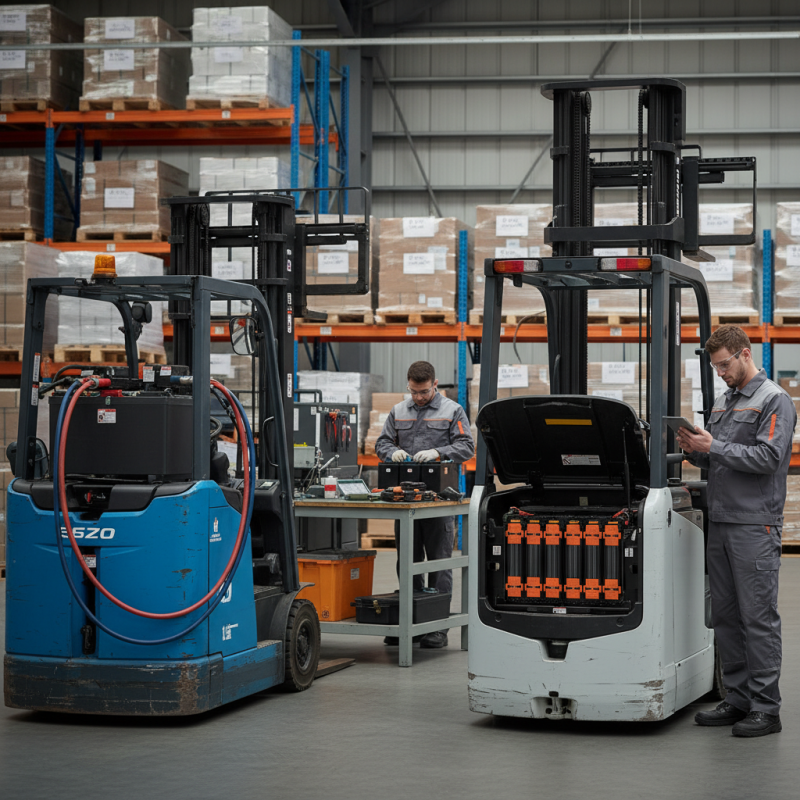
Electric forklift batteries play a crucial role in the efficiency of warehouses and factories across China. These batteries are designed for high performance and reliability. Typically, they last between four to seven years, depending on usage and maintenance. Factors like charging cycles and environmental conditions significantly affect their longevity. Regular maintenance is essential to ensure optimal performance.
In recent years, there has been a noticeable shift in technology. Many companies are investing in more advanced battery technology, aiming to reduce downtime and increase productivity. Lithium-ion batteries are gaining popularity due to their longer lifespan and faster charging times. However, they also come with higher upfront costs, leading to a reevaluation of budget priorities.
While many electric forklift batteries meet industrial needs, not all batteries provide the same efficiency. Some may experience performance drops sooner than expected. Users should carefully consider their operational demands. Understanding battery specifications and seeking expert advice can lead to better decisions. Regular assessments help in identifying issues early, ensuring smoother warehouse operations in the long run.
| Battery Type | Average Lifespan (Years) | Charge Cycles | Maintenance | Weight (kg) |
|---|---|---|---|---|
| Lead Acid | 5-7 | 1500 | Regular topping up of water | 300-600 |
| Lithium Ion | 8-10 | 3000 | Minimal maintenance required | 200-400 |
| Nickel Cadmium | 6-8 | 1500-2000 | Requires regular cycling | 400-700 |
| Gel | 4-6 | 1200 | Low maintenance | 250-550 |
Electric forklifts are essential in warehouses and manufacturing environments. However, the longevity of their batteries varies significantly. Several factors impact how long these vital components last.
Temperature plays a crucial role. Operating at extreme temperatures can reduce battery life. High heat can lead to quicker degradation. Cold conditions can decrease capacity and efficiency. Regularly monitoring the operating environment is key.
Charging practices also matter. Deep discharges can harm batteries over time. Adopting a habit of partial charging is wise. This practice promotes healthier battery cycles. Additionally, using the right charger is critical. Using a compatible charger ensures optimal performance and longevity.
Tips: Regular maintenance checks can catch issues early. Clean terminals can allow better connections. Lastly, be aware of how frequently the battery is used. Operational habits should be evaluated to optimize battery health. Each of these factors deserves attention for better battery reliability. Managing them can enhance performance significantly, extending battery lifespan.
Electric forklift batteries are essential for efficient warehouse operations. The typical lifespan of these batteries can vary widely based on several factors. Generally, lead-acid batteries last around five to seven years. In contrast, lithium-ion batteries can extend their operational life to ten years or more. This variation is influenced by usage patterns, charging practices, and environmental conditions.
Data indicates that under optimal conditions, lithium-ion batteries maintain about 80% of their capacity after five years of use. This is a significant advantage over traditional options. However, not all facilities take full advantage of the longer lifespan. Regular maintenance is often overlooked, impacting performance and longevity. This lack of attention to detail results in reduced efficiency and increased costs.
Furthermore, battery performance can deteriorate due to improper charging. Excessive heat or cold can also affect battery life. Employees need proper training to handle battery maintenance safely. Investing in training can lead to better service life and performance. Unfortunately, many operators neglect this important aspect. As a result, businesses may find themselves replacing their batteries prematurely.
Proper maintenance of electric forklift batteries is crucial for extending their lifespan. Reports indicate that with adequate care, batteries can last anywhere from five to seven years. This lifespan can be influenced by several factors, including usage patterns and charging practices.
Regularly checking battery water levels is essential. Low water levels can lead to irreversible damage. Additionally, maintaining a clean battery environment and avoiding exposure to extreme temperatures can prevent performance degradation. Many experts recommend implementing a schedule for battery maintenance. A structured routine helps to identify issues early.
**Tip:** Always charge batteries after each use. This practice not only prevents deep discharges but also promotes optimal battery performance.
Battery training for operators is another vital aspect. Understanding how to safely operate and maintain batteries ensures longevity. Misuse can quickly lead to a decline in capacity. Over time, improper handling may result in higher operational costs.
**Tip:** Use appropriate charging equipment for your batteries. Mismatched chargers can cause overheating and shorten battery life.
In conclusion, regular maintenance and operator training can greatly enhance battery lifespan and efficiency. Understanding the nuances of battery care is key in any industrial setting.
When evaluating electric forklift batteries in China, it is essential to explore the leading brands. Data indicates that battery longevity varies significantly across different manufacturers. A recent report showed that premium batteries can last from 1,500 to 2,500 charging cycles. In contrast, more economical options often fall short, averaging around 1,000 to 1,500 cycles. This discrepancy can affect overall operational costs.
Charging times also play a critical role in battery performance. Enhanced technologies have enabled rapid charging solutions, making some brands more appealing to businesses. However, many lower-tier options remain inefficient, increasing downtime. According to studies, efficient batteries reach about 90% charge in under two hours, while their counterparts might take over five hours. These differences can impact productivity, especially in fast-paced warehouse settings.
Other factors like temperature tolerance and cycle life should not be overlooked. Some batteries perform better in extreme conditions, exhibiting less degradation. It is crucial to evaluate how these variables meet specific operational needs. Investing in quality batteries can reduce long-term costs despite higher upfront prices. This suggests that careful selection is vital for maximizing efficiency in electric forklift operations.
: Electric forklift batteries usually last between four to seven years, depending on usage and maintenance.
Temperature, charging practices, and operational habits significantly impact battery life and performance.
Regular maintenance helps identify potential issues early, ensuring optimal performance and extending battery lifespan.
High heat can speed up degradation, while cold conditions may reduce capacity and efficiency.
Avoid deep discharges and adopt partial charging habits to enhance battery longevity.
Yes, they have longer lifespans and faster charging times but come with higher upfront costs.
No, some batteries may experience performance drops sooner, so careful selection is necessary.
Frequent usage patterns and charging behaviors can significantly influence the overall health of the battery.
Users need to monitor temperature extremes and ensure proper airflow to enhance battery lifespan.
Yes, understanding battery specifications and seeking guidance can lead to better decision-making.
Electric forklift batteries are essential for the efficient operation of warehouses and industrial facilities. Understanding how long do electric forklift batteries last is crucial for businesses looking to optimize their operations. Factors affecting battery longevity include usage patterns, charging habits, and environmental conditions. Generally, the typical lifespan of these batteries ranges from 3 to 7 years, depending on maintenance and care.
Regular maintenance practices, such as proper charging cycles and keeping batteries clean, can significantly extend their life. Moreover, comparing leading brands reveals variations in durability and performance, which can help users make informed decisions. By focusing on maintenance and understanding the factors influencing battery longevity, businesses can maximize their investment in electric forklift technology.
