LM Forklift
Calculating the correct aisle width for forklifts is crucial for warehouse efficiency. "How to calculate forklift aisle width requirements" is not just about numbers; it affects speed and safety. Experts like John Smith, a warehouse logistics consultant, emphasize, “Every inch counts in optimizing space and ensuring safety.”
In a busy warehouse, tight aisles can lead to accidents or slowdowns. Forklifts need room to maneuver without risking damage to equipment or products. Inefficient spacing can lead to lost time and increased operational costs. Relying on outdated calculations might not serve today’s high-demand environments.
Understanding how to calculate forklift aisle width requirements involves various factors, including the type of forklift and the load size. It's a detail that influences productivity. The right width can enhance operations, but incorrect measurements can create significant issues. Don’t overlook these details—reflect on your current setup and seek improvements where necessary.
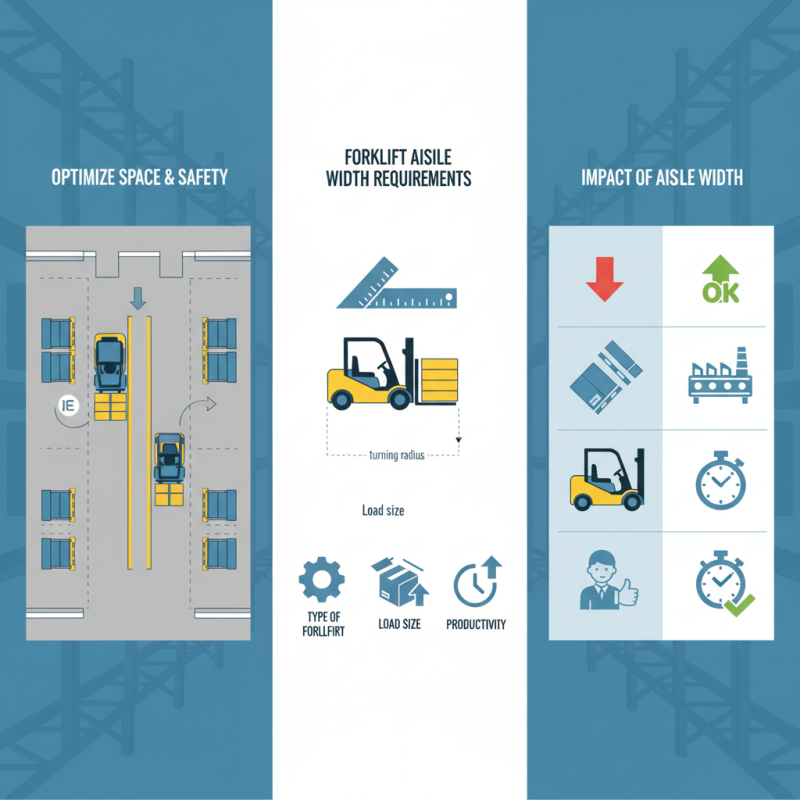
Aisle width plays a crucial role in warehouse operations. It affects efficiency, safety, and overall workflow. Aisles that are too narrow hinder movement and slow down processes. According to a report by the Warehouse Efficiency Association, adequate aisle width can improve picking speed by up to 30%. This is particularly important as warehouses handle increasing volumes of inventory.
When calculating the required aisle width, consider the forklift size and the type of load being handled. Aisles must accommodate the turning radius of the forklift. For example, if you use a standard forklift, creating at least 12-foot wide aisles is generally recommended. This allows safe maneuvering while minimizing risk.
**Tips:** Regularly assess aisle width as your warehouse layout or equipment changes. Inadequate space may lead to accidents.
Another factor is the type of racking system. Single-deep racks may require narrower aisles, while double-deep configurations need wider ones. A good practice is to consult with industry experts to tailor aisle dimensions to specific equipment and operations.
**Tips:** Don’t hesitate to reevaluate aisle widths; safety and efficiency depend on it.
Warehouse managers should balance inventory density with sufficient aisle space. Ideal conditions promote quicker access to goods and reduce downtime. However, many facilities struggle with this balance, leading to congested aisles.
When evaluating forklift dimensions, one critical aspect is the
turning radius. This measurement indicates how much space a forklift needs to maneuver without hitting shelves or other obstacles. A standard forklift may have a turning radius ranging from 48 to 75 inches, depending on its design. Understanding this can help you accurately determine the aisle width requirements for your warehouse.
Knowing the height of your shelves is also essential. Taller shelves can limit visibility, making it necessary for wider aisles. If a forklift lacks the agility to turn properly in tight spaces, it can lead to accidents. Furthermore, a cramped layout may restrict inventory accessibility, affecting productivity.
Tips: Always measure the width of your forklifts when planning aisles. Consider the operator's comfort too. A wider aisle allows for safer and easier movements. Regular reviews of aisle use can help identify any necessary adjustments to improve workflow efficiency. Inspect your warehouse layout periodically, as shifts in inventory levels might require changes in aisle widths.
Assessing the warehouse layout and rack configuration is crucial for determining aisle width requirements. Various factors come into play when deciding how much space is needed. First, consider the type of forklifts used. Different forklifts have varying dimensions and turning radii, directly influencing aisle width. Standard fork widths may limit accessibility in narrower aisles.
Next, evaluate the rack configuration. Are the racks single or double-deep? Single-deep racks may allow for tighter aisles, while double-deep racks require wider lanes for maneuverability. The height of racks also impacts how much clearance is necessary. High racks can create complex handling challenges, urging warehouse managers to rethink aisle spacing.
It’s vital to reflect on these aspects during the planning stage. Often, operations evolve over time. Needs change and adjustments must occur. An initial layout may seem efficient, but operational bottlenecks can reveal underlying flaws. Regularly revisiting these configurations helps in optimizing warehouse efficiency. Keeping communication open with staff can provide insights that lead to practical improvements.
When calculating aisle width for forklifts, usage frequency plays a key role. A busy warehouse may require wider aisles. Operators need space to maneuver. Forklifts can vary in size, so understanding the specific models in use is crucial. For instance, a narrow aisle forklift needs less room. However, if operated frequently, it may still necessitate additional space to prevent accidents.
Consider the daily operations. Are the forklifts moving pallets continuously or intermittently? Frequent movements increase the likelihood of collisions. Aisles that seem sufficiently wide may feel cramped during peak times. Aisle dimensions should accommodate not just the forklifts but also the safety of workers. The ideal width aligns with both efficiency and safety considerations.
Developing a plan requires real analysis. Measure actual forklift usage and traffic patterns. Review historical data on accidents or near misses in the aisles. Feedback from operators can reveal pain points to improve layout. A well-designed aisle can reduce frustration and enhance productivity. Prioritizing safety and efficiency leads to a sustainable warehouse environment.
Implementing safety standards in forklift operations is critical for any warehouse environment. According to the Occupational Safety and Health Administration (OSHA), forklift accidents account for a significant portion of workplace injuries. In fact, about 70% of these accidents involve a pedestrian. Therefore, optimizing aisle widths is essential not only for efficiency but also for safety.
Aisle widths should accommodate both the forklift's turning radius and the operator's visibility. Research indicates that a minimum width of 10 feet is ideal for most standard forklifts. This ensures smooth navigation and minimizes the risk of collisions. However, in facilities with narrow aisles, it’s vital to assess the potential for accidents. For instance, implementing designated pedestrian zones can further enhance safety. Regular training sessions for operators also contribute to risk reduction.
Inconsistent adherence to safety protocols can lead to dangerous situations. A recent survey showed that 20% of warehouses do not regularly evaluate their safety measures. This oversight can create hazards that might be easily managed with proper planning and adjustments. By critically assessing aisle width and investing in safety training, warehouses can create a more secure environment for both operators and pedestrians.
This chart illustrates the recommended aisle widths based on the type of forklift used in warehouse operations. Aisle width is crucial for ensuring safe and efficient forklift movement.
: Aisle width affects efficiency, safety, and workflow. Narrow aisles can slow down processes and hinder movement.
At least 12-foot wide aisles are recommended for standard forklifts. This allows safer maneuvering and reduces risks.
Single-deep racks need narrower aisles, while double-deep configurations require wider spaces to maintain safety.
Consider forklift size, turning radius, and the type of loads. These elements dictate the necessary aisle dimensions.
Managers must evaluate access speed and aisle space continuously. Many warehouses struggle to find this balance, leading to congestion.
Taller shelves can limit visibility, necessitating wider aisles for safe forklift maneuvering and increased access to inventory.
Regular assessments are crucial. Changes in warehouse layout or equipment may require adjustments to aisle dimensions for safety.
The turning radius indicates space needed for forklifts to maneuver without hitting obstacles. Accurate measurements ensure proper aisle planning.
Cramped aisles can lead to accidents and decreased productivity. It's essential to maintain sufficient space for safety and efficiency.
Yes, operator comfort is important. Wider aisles facilitate easier movements, contributing to a safer working environment.
In the article "How to Calculate Forklift Aisle Width Requirements for Your Warehouse," we explore the critical role that aisle width plays in ensuring efficient warehouse operations. Understanding the dimensions of forklifts and their turning radiuses is essential, as these factors directly influence how much space is needed for safe and effective maneuvering. Assessing the layout of the warehouse, including rack configurations, helps in determining the optimal aisle width that accommodates various forklift models while maximizing storage capacity.
Furthermore, the article emphasizes the importance of calculating aisle width based on how frequently forklifts are used within the warehouse. This frequency impacts the wear and tear on the equipment and the overall safety of operations. Implementing safety standards and regulations is crucial to maintain a hazard-free work environment. Overall, knowing how to calculate forklift aisle width requirements is vital for improving efficiency and safety in any warehouse setting.
